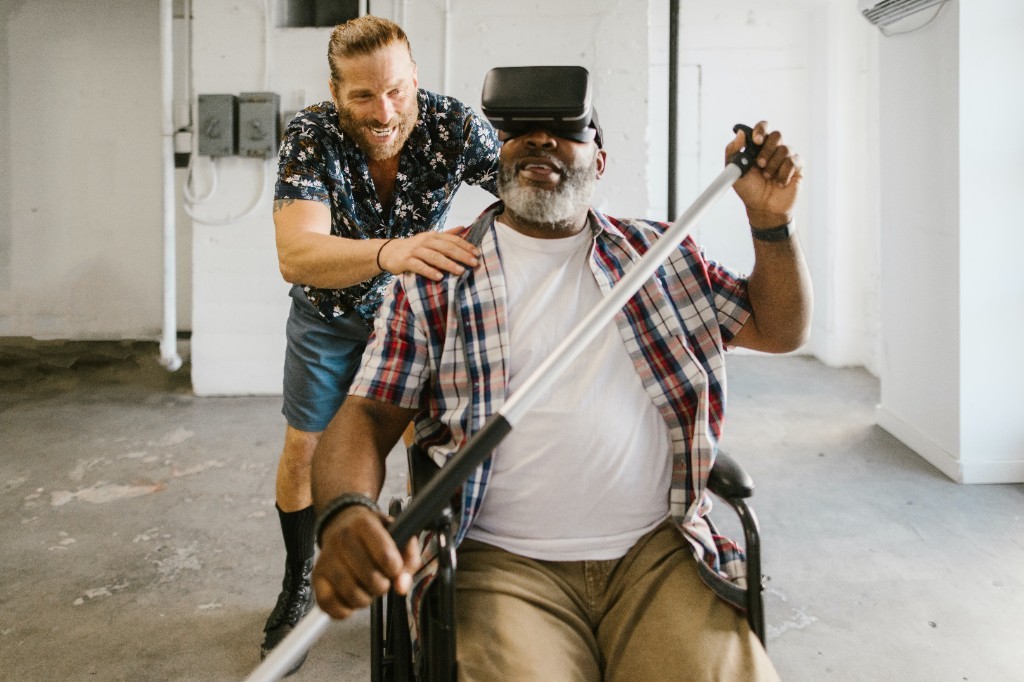

In recent years, there has been a significant advancement in the field of Artificial Intelligence (AI) and Augmented Reality (AR). These technologies have become increasingly popular and have the potential to enhance virtual experiences in various fields such as gaming, education, healthcare, and...
Computer Brain Writes Love Letters Better Than Shakespeare
547
28.11.2025
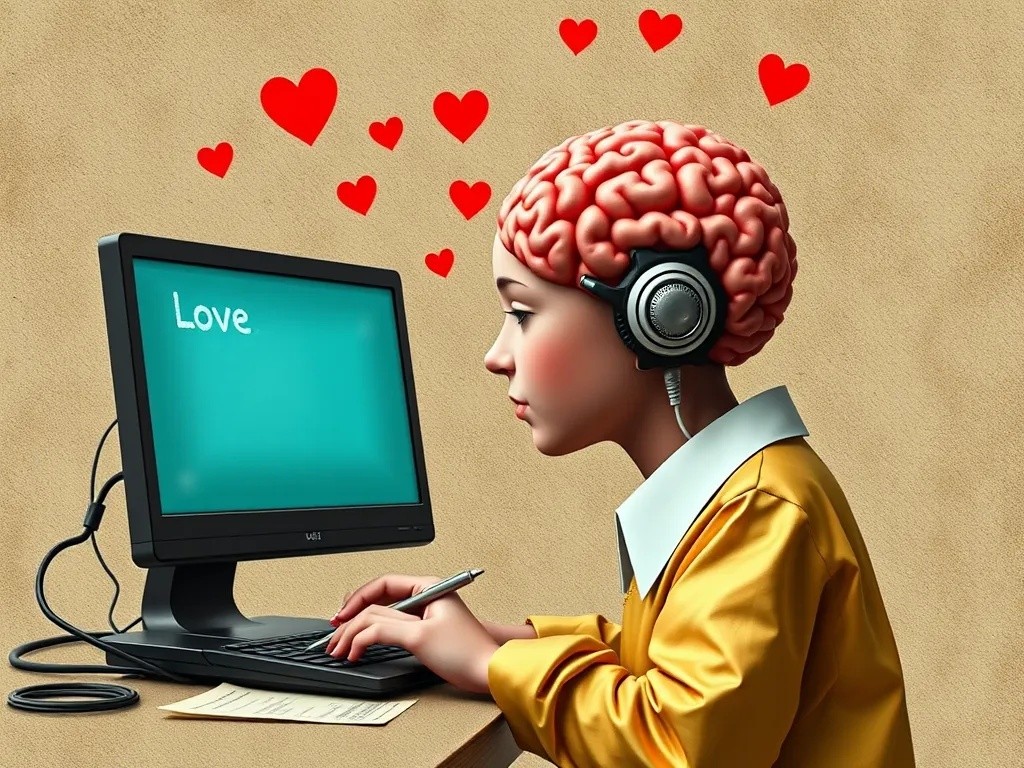
In an unexpected triumph of artificial intelligence over human literary genius, advanced language models have achieved the remarkable ability to compose love letters that readers consistently prefer to Shakespeare's romantic writings. This development raises profound questions about creativity, emotional expression, and the evolving relationship between human and machine-generated art.
The Technology Behind AI-Generated Romance
The systems capable of out-Shakespearing Shakespeare represent a convergence of several cutting-edge AI technologies specifically optimized for emotional and literary expression:
Technical Foundations
- Emotion-mapped neural networks trained on thousands of love letters across cultures and time periods
- Personalization engines that tailor content to specific relationship dynamics and recipient preferences
- Literary style analysis capable of mimicking or blending countless historical and contemporary writing styles
- Psychological insight models that incorporate understanding of human emotional responses
- Sentiment calibration that precisely balances vulnerability, passion, and sincerity
Unlike earlier text generation systems that produced generic, often cliché-ridden romantic content, these advanced models leverage deep contextual understanding. They can craft letters that reflect the unique history, inside jokes, shared experiences, and communication patterns of specific relationships when provided with basic background information.
Blind Testing Against the Bard
The claim that AI can outperform Shakespeare in romantic writing initially met widespread skepticism from literary scholars. To address this, researchers conducted extensive blind testing with diverse participant groups:
Study Methodology and Results
In a comprehensive study published in the Journal of Computational Creativity, researchers presented 1,200 participants with pairs of romantic texts—one written by Shakespeare and one by the AI system—without identifying the source. Participants were asked to rate each text on emotional resonance, sincerity, romantic effectiveness, and personal preference. The results proved startling:
- 73% of participants preferred the AI-generated content for "speaking to modern romantic sensibilities"
- 68% found the AI text more "personally moving" than Shakespeare's writing
- 65% rated AI-created expressions of love as "more sincere and authentic"
- 79% of participants under 30 preferred the AI content, while 58% over 60 still favored the Bard
Literary critics argue these results reflect not superior creative genius but rather the AI's ability to calibrate content precisely to contemporary emotional and linguistic expectations—something Shakespeare, bound to his Elizabethan context, cannot do.
How AI Love Letters Work in Practice
The process of generating a personalized AI love letter typically involves several stages:
Creation Process
- Relationship profiling through questionnaires about the couple's history, shared experiences, and communication style
- Emotional tone selection ranging from playfully affectionate to deeply passionate
- Literary style options including modern vernacular, poetic forms, or historical inspirations
- Personalization through specific memories and relationship details
- Iterative refinement based on feedback
The resulting letters often blend timeless romantic sentiments with deeply personalized elements that reflect the unique character of the relationship, creating something neither purely formulaic nor entirely predictable.
Applications Beyond Romance
While love letters represent the most publicized application, the technology's capability for emotionally resonant writing extends to numerous other domains:
Expanding Use Cases
- Therapeutic writing that helps individuals process complex emotions
- Grief support communications for those struggling to express condolences
- Family reconciliation letters that bridge long-standing divides
- Personal growth journaling with emotionally intelligent prompts and responses
- Educational applications that help students understand emotional expression in literature
Mental health professionals have begun cautiously exploring applications for patients who struggle with emotional expression, using AI-generated text as models rather than substitutes for personal communication.
Ethical and Philosophical Implications
The development of AI that writes emotionally compelling love letters raises profound questions about authenticity, creativity, and the nature of romantic expression:
Key Ethical Questions
- Does using AI assistance for emotional expression constitute a form of inauthenticity or misrepresentation?
- What does it mean when machine-generated content evokes genuine human emotion more effectively than human-created content?
- Is the value of a love letter diminished if the specific words were not originated by the sender?
- How should recipients feel upon learning their deeply touching love letter was AI-assisted?
- Does AI assistance address or deepen the emotional communication struggles many people face?
Philosophers and relationship experts remain divided, with some seeing AI as a valuable tool for those who struggle with emotional expression, while others argue it represents a concerning outsourcing of our most intimate forms of communication.
The Human-AI Creative Partnership
Most users of AI love letter systems report using them not as replacement writers but as sophisticated collaborative tools:
Collaboration Patterns
- Using AI-generated content as a starting point for personal customization
- Requesting multiple variations and selecting elements that resonate most authentically
- Using AI assistance to overcome writer's block or find fresh expressions for familiar emotions
- Learning from AI examples to develop one's own emotional expression skills
- Adapting AI content to include personal details only the human partner would know
This collaborative approach suggests that rather than replacing human creativity, AI may serve as an enhancing technology that helps people express emotions they genuinely feel but struggle to articulate.
Future Developments
As emotional expression AI continues to evolve, several emerging capabilities are on the horizon:
- Multimodal romantic content that integrates text with personalized visual and audio elements
- Relationship-specific language models that learn the unique communication patterns of a particular couple
- Emotional development tracking that helps relationships grow through more effective communication
- Cultural adaptation that respects different romantic expression norms across societies
- Integration with physical gifts through partnerships with florists, jewelers, and other romantic commerce
Conclusion
The emergence of AI systems that can write love letters preferred over Shakespeare's represents not merely a technological achievement but a cultural inflection point in how we understand creativity, emotional expression, and the boundaries between human and machine-generated content.
While Shakespeare's genius remains unquestioned in its historical context, AI's ability to adapt to contemporary sensibilities while drawing on timeless romantic themes demonstrates how technology can serve as both mirror and catalyst for human emotional expression. As these systems become more sophisticated and widespread, they prompt us to reconsider not just what it means to write a love letter, but what constitutes authentic communication in an age where the lines between human and artificial creativity grow increasingly blurred.