

In recent years, there has been a significant advancement in the field of Artificial Intelligence (AI) and Augmented Reality (AR). These technologies have become increasingly popular and have the potential to enhance virtual experiences in various fields such as gaming, education, healthcare, and...
Digital Animal Translator Helps Pets Tell Owners What They Want
457
01.12.2025
Bridging the Interspecies Communication Gap
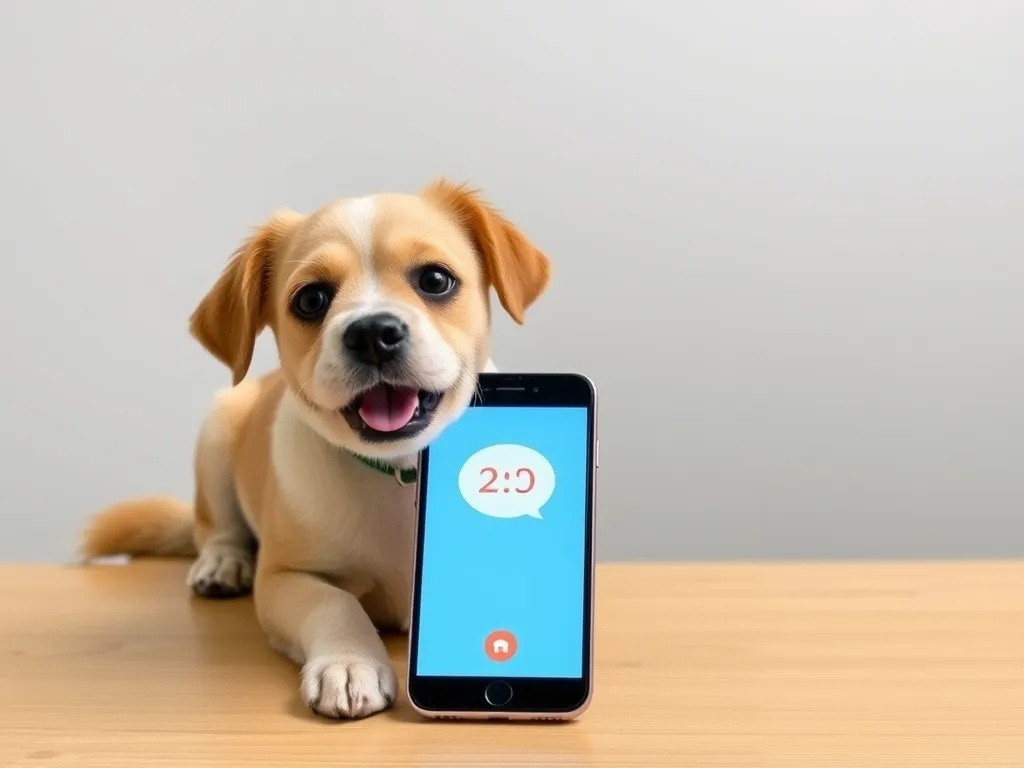
The relationship between humans and their animal companions has always been limited by communication barriers. While experienced pet owners learn to interpret certain behaviors and vocalizations, much of animal communication remains indecipherable to human perception. Digital animal translators represent a revolutionary advancement in interspecies communication technology, employing sophisticated algorithms to decode and translate animal sounds, movements, and physiological signals into human-understandable messages.
These systems move beyond simplistic interpretations of basic needs to provide nuanced insights into animals' emotional states, preferences, and specific requests. By enabling clearer bidirectional communication, digital translators promise to transform human-animal relationships, enhancing both care quality and emotional bonds.
Scientific Foundations of Animal Translation Technology
The development of effective animal translation systems draws from multiple scientific disciplines:
- Bioacoustics - The study of animal sounds and their meanings
- Ethology - Research into natural animal behavior patterns
- Neuroscience - Understanding brain activity associated with communication
- Machine learning - Algorithms that recognize patterns in complex data
- Comparative linguistics - Analysis of communication structures across species
Research has revealed that animal vocalizations are far more complex and information-rich than previously understood. Dogs, for instance, combine different barks, whines, and growls into a sophisticated acoustic system that conveys specific information about their needs, emotional states, and responses to environmental stimuli. Similar complexity has been documented in cats, birds, and many other domestic and wild species.
How Digital Translators Work
Modern animal translation systems employ a multi-modal approach to interpretation:
- Sound analysis that identifies acoustic patterns in vocalizations
- Visual processing that tracks facial expressions and body language
- Physiological monitoring through non-invasive sensors
- Contextual awareness that considers environmental factors
- Individualized learning that adapts to specific animals over time
These inputs feed into machine learning algorithms trained on extensive databases of annotated animal communications. The systems improve accuracy through continuous learning, adapting to the unique communication styles of individual animals and developing increasingly nuanced translation capabilities through ongoing interaction.

Practical Applications for Pet Owners
Digital animal translators offer numerous practical benefits for everyday pet care. Health monitoring becomes more effective as animals can communicate specific discomforts before they develop into serious conditions. Behavioral issues can be addressed more effectively when owners understand underlying causes rather than simply responding to symptoms. Training becomes more intuitive when communication flows in both directions, allowing for clearer reinforcement and feedback.
Beyond these practical applications, translators enhance the emotional dimension of human-animal relationships. Owners report deeper connections with their pets when communication barriers are reduced, leading to increased empathy and more satisfying interactions for both parties.
Current Capabilities and Limitations
Today's animal translation technology varies in sophistication across different species and communication types:
- Dogs: Most advanced systems can identify up to 15-20 distinct communication categories
- Cats: Translators typically recognize 10-15 common needs and emotional states
- Birds: Systems can distinguish between alarm calls, territorial signals, and mating communications
- Horses: Translators focus primarily on stress indicators and basic comfort requests
- Exotic pets: Limited capabilities with ongoing research for species-specific patterns
Current limitations include difficulty interpreting subtle communication variations, challenges in distinguishing between similar emotional states, and reduced accuracy in multi-pet households where vocalizations may overlap or influence each other.
Ethical Considerations and Future Directions
The development of animal translation technology raises important ethical questions about the human-animal relationship. Critics argue that anthropomorphizing animal communication risks misinterpreting their actual experiences, potentially leading to inappropriate responses to their genuine needs. Others express concern about privacy implications and the potential commercialization of animal data.
Proponents counter that improved communication can only enhance animal welfare by enabling more responsive care tailored to individual needs. They emphasize that translation systems are designed to interpret communication in species-appropriate contexts rather than projecting human concepts onto animal behavior.
Future research directions include more sophisticated emotional mapping that distinguishes between nuanced states like contentment versus excitement or anxiety versus fear. Integration with smart home systems will allow for automated responses to common animal requests, such as adjusting room temperature or providing fresh water when needed.
As translation accuracy improves, possibilities extend to more complex interspecies relationships, potentially revolutionizing fields like animal-assisted therapy, wildlife conservation, and zoological management. The technology promises not only to enhance the lives of pets and their owners but also to transform our broader understanding of animal cognition and communication across species boundaries.