

In recent years, there has been a significant advancement in the field of Artificial Intelligence (AI) and Augmented Reality (AR). These technologies have become increasingly popular and have the potential to enhance virtual experiences in various fields such as gaming, education, healthcare, and...
Digital Geologist AI Searches for Mineral Deposits
1055
09.03.2026

Revolutionizing Mineral Exploration
Traditional mineral exploration requires geologists spending months or years in remote locations, conducting surveys and drilling tests based on intuition and experience. This process proves expensive, time-consuming, and often unsuccessful. Artificial intelligence now accelerates exploration dramatically, analyzing massive geological datasets to identify promising mineral locations with unprecedented accuracy.
How AI Analyzes Geological Data
Data Integration and Processing
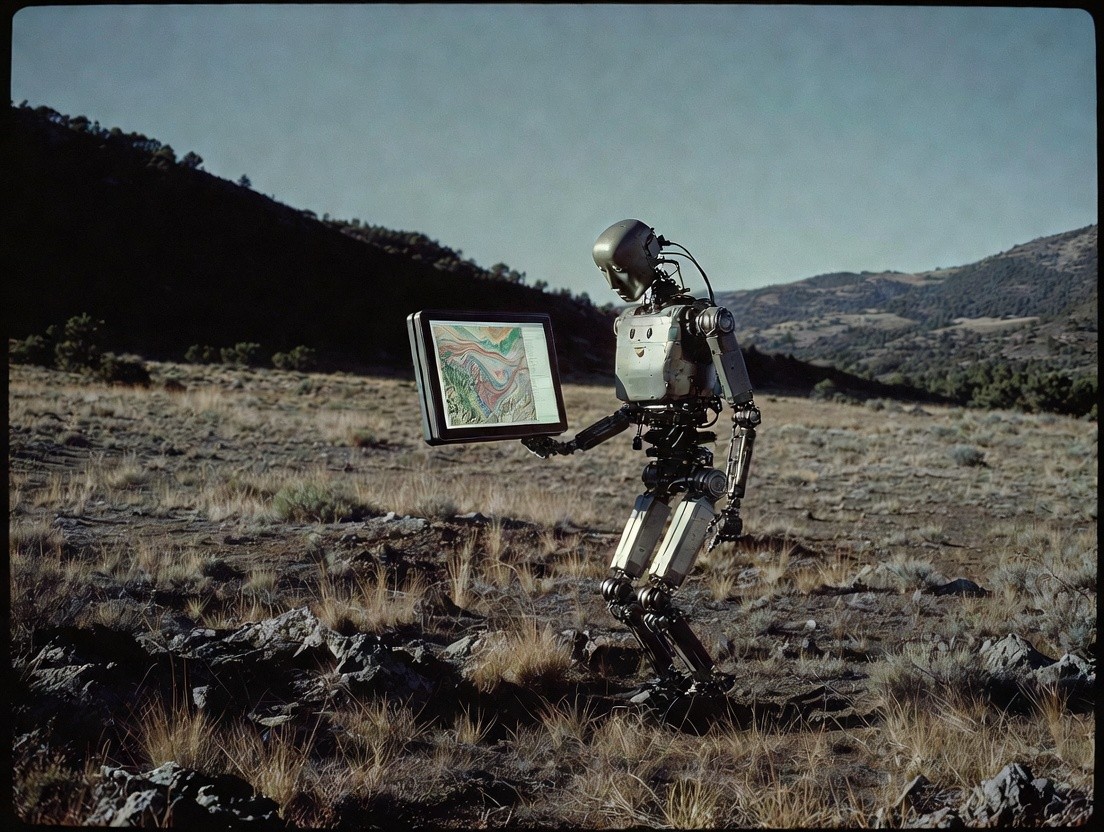
The digital geologist AI system integrates data from multiple sources including satellite imagery, geological surveys, historical mining records, geophysical measurements, and seismic data. The AI processes this information at scales and speeds impossible for human geologists, identifying subtle patterns indicating mineral presence.
Pattern Recognition Capabilities
Machine learning algorithms recognize geological signatures associated with specific mineral deposits. Certain rock formations, structural patterns, and chemical compositions indicate precious metals, rare earth elements, or other valuable resources. The AI learns these patterns from known deposits and applies this knowledge to unexplored regions.
Key Technologies Employed
Advanced Data Analysis Methods
- Satellite and aerial imaging analysis for surface geological features
- Gravity and magnetic field anomaly detection
- Seismic data interpretation for subsurface structure mapping
- Chemical composition analysis from soil and rock samples
- Thermal imaging to identify geothermal mineral indicators
- Historical data correlation with successful previous discoveries
- Predictive modeling for undiscovered deposit locations
Mineral Discovery Process
Systematic Search Methodology
The AI prioritizes unexplored regions based on geological similarity to known productive areas. It analyzes subsurface structures that typically host valuable minerals. When multiple indicators align—appropriate rock types, structural traps, chemical signatures—the system flags these locations as high-priority exploration targets.
Risk Assessment
Beyond identifying mineral locations, the AI evaluates extraction feasibility, environmental factors, and economic viability. It predicts deposit sizes and ore grades, helping companies make informed investment decisions before expensive exploration drilling.
Successful Applications and Results
Real-World Discoveries
Mining companies employing AI exploration have discovered significant deposits with fewer exploratory boreholes than traditional methods required. Some operations report 60-70% reductions in exploration costs while improving success rates. Companies have located deposits geologists previously considered unlikely, in regions thought fully explored.
Rare Earth Elements and Critical Materials
As demand for rare earth elements and battery metals accelerates, AI-assisted exploration becomes increasingly valuable. The digital geologist has identified new lithium, cobalt, and rare earth deposits, critical for renewable energy and technology industries. These discoveries reduce supply chain vulnerabilities for strategic materials.
Environmental and Economic Benefits
Efficient Resource Utilization
By identifying the most promising deposit locations, AI reduces unnecessary exploration in unsuitable areas. This focused approach minimizes environmental disruption while maximizing economic returns. Companies invest exploration budgets more efficiently, improving overall productivity.
Climate Change Adaptation
Melting ice caps and changing glacial patterns expose previously inaccessible mineral deposits. AI analyzes these newly exposed regions, identifying resources that can be accessed sustainably. This adaptation helps meet growing resource demands as climate shifts create new opportunities.
Technical Capabilities and Limitations
Current Performance
Modern digital geologist systems achieve accuracy rates of 70-85% in identifying mineralized zones. Performance improves with larger datasets and more detailed geological information. However, unique geological settings sometimes require supplementary human expertise and field verification.
Data Requirements
The AI performs best in well-surveyed regions with extensive historical geological records. In frontier areas lacking previous exploration data, accuracy decreases. Additionally, the system works optimally for deposit types included in its training data; entirely novel mineral occurrences may be missed.
Future Developments
Next-generation systems will incorporate real-time drilling data, continuously improving predictions as new boreholes provide subsurface information. Integration with autonomous drilling systems will enable the AI to direct exploration activities dynamically. Quantum computing applications may enable even more complex geological modeling and prediction.
Sustainability and Responsible Mining
AI-assisted exploration enables more sustainable mining practices by identifying the most efficient deposits to extract and suggesting less environmentally disruptive extraction methods. This responsible approach balances resource availability with environmental protection, supporting global transition to renewable energy and circular economies.
Conclusion
The digital geologist represents a fundamental transformation in mineral exploration. By analyzing geological data with unprecedented sophistication, AI identifies mineral deposits far more efficiently than traditional methods. This technology promises improved resource availability, reduced exploration costs, and more sustainable mining practices globally. As the technology continues advancing, artificial intelligence will remain central to meeting global mineral demands.