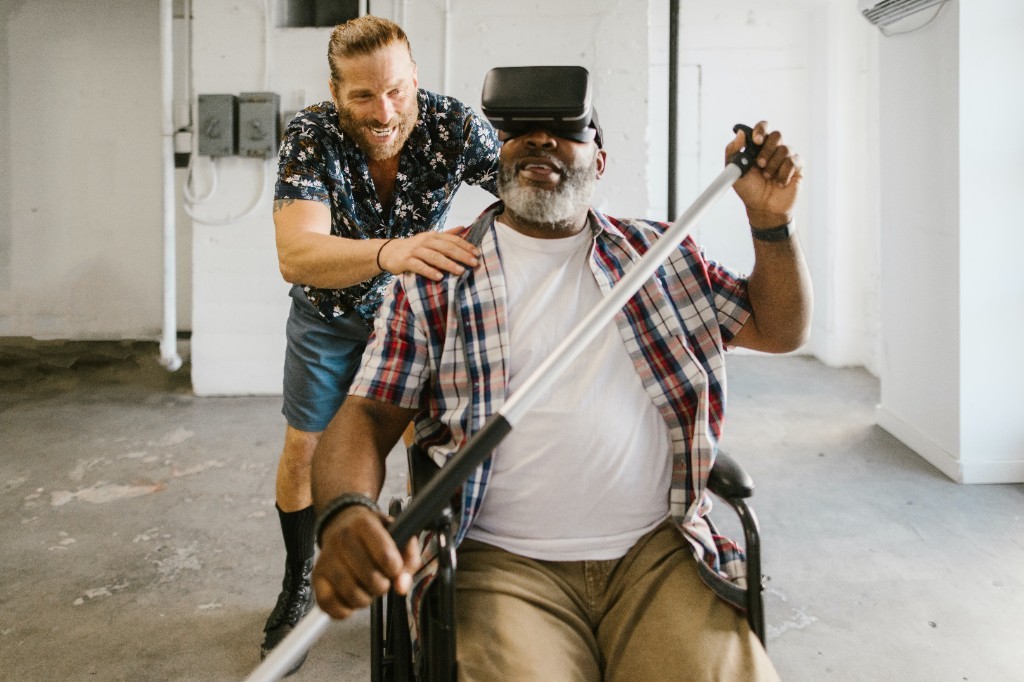

In recent years, there has been a significant advancement in the field of Artificial Intelligence (AI) and Augmented Reality (AR). These technologies have become increasingly popular and have the potential to enhance virtual experiences in various fields such as gaming, education, healthcare, and...
Digital Memory Keeper Records Family Stories For Future Generations
431
25.11.2025
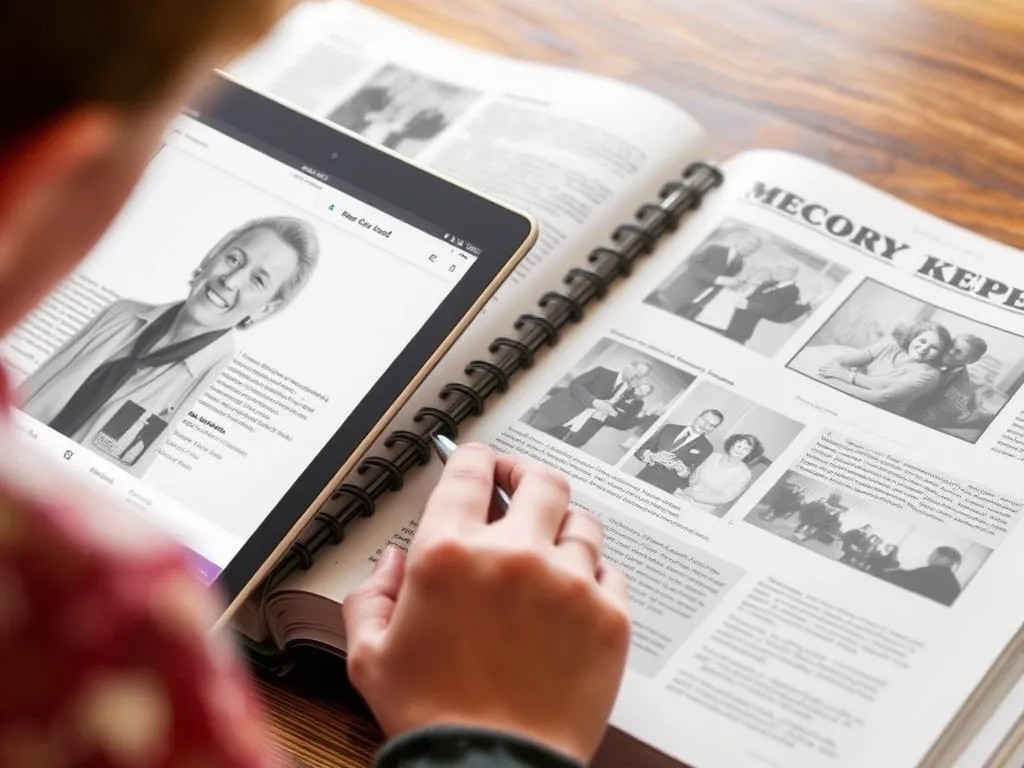
Family histories—the stories, traditions, and experiences that shape our identities—have traditionally been passed down through oral storytelling, written memoirs, and aging photo albums. Unfortunately, many of these precious memories fade or disappear entirely as older generations pass away, often before younger family members realize the value of what's being lost. A groundbreaking technology called the Digital Memory Keeper is now addressing this perennial human challenge, using advanced artificial intelligence to preserve family narratives with unprecedented fidelity and accessibility for future generations.
Comprehensive Memory Capture
The Digital Memory Keeper represents a dramatic evolution beyond simple recording devices or digital photo albums. This sophisticated system utilizes multiple complementary technologies to create rich, contextual records of family histories that capture not just facts and images, but emotions, relationships, and cultural significance.
Multi-Modal Recording Technologies
At the hardware level, the system incorporates several advanced recording capabilities:
- High-fidelity audio capture: Specialized microphone arrays that isolate voices even in noisy environments while preserving the unique tonal qualities that make each voice distinctive.
- Adaptive video recording: Multi-angle cameras that automatically adjust to capture meaningful moments, expressions, and interactions without requiring manual operation.
- Physiological response monitoring: Optional sensors that can record emotional responses through subtle changes in voice patterns, facial expressions, and even biometric indicators like heart rate variability.
- Environmental context capture: Ambient recordings that preserve the setting and atmosphere of storytelling moments—the sounds of a family kitchen, the crackling of a fireplace, or the ambient noise of a family gathering.
- Artifact digitization: Integrated scanning and photogrammetry capabilities that create detailed digital records of family heirlooms, photographs, letters, and other physical mementos.
Intelligent Conversational Guidance
What truly distinguishes the Digital Memory Keeper is its conversational AI system, which guides the memory collection process with remarkable sensitivity and depth. Unlike rigid interview protocols, the system adapts its approach based on each individual's communication style, emotional responses, and the narrative threads that emerge during conversations.
The AI interviewer employs sophisticated techniques from oral history methodology, psychology, and narrative theory to elicit meaningful stories:
- Open-ended questions that invite detailed reflection
- Thoughtful follow-ups that explore emotional significance
- Gentle prompts that help recover details from distant memories
- Thematic exploration that connects individual experiences to broader family narratives
- Cultural and historical contextualization that places personal stories within larger societal frameworks
Users consistently report that conversations with the system feel natural and supportive, often leading to the sharing of stories and memories that might never emerge in conventional recordings or interviews.
Intelligent Processing and Organization
Once memories are captured, the Digital Memory Keeper applies sophisticated processing to transform raw recordings into structured, searchable, and emotionally resonant archives.
Narrative Analysis and Organization
The system's neural networks analyze collected material along multiple dimensions:
- Thematic mapping: Identifies recurring themes, values, and motifs across different stories and storytellers.
- Chronological structuring: Places events within historical timelines while noting connections between temporally distant experiences.
- Relationship mapping: Builds detailed models of family connections, influences, and dynamics mentioned across multiple narratives.
- Cultural context analysis: Identifies references to cultural practices, historical events, and community traditions that may require explanation for future generations.
- Emotional significance marking: Tags stories with emotional valence and significance based on both content analysis and biometric indicators.
This processing creates a rich metadata layer that makes the archive not just searchable but meaningfully navigable, allowing future family members to explore their heritage through multiple pathways—following thematic threads, exploring specific relationships, or tracing the evolution of family traditions over time.
Preservation and Security
Recognizing that family memories are both precious and often private, the Digital Memory Keeper incorporates robust preservation and security measures:
- Distributed storage: Archives are redundantly stored across multiple secure locations to prevent loss.
- Format-agnostic encoding: Materials are preserved in both current formats and fundamental encodings designed for long-term accessibility.
- Granular privacy controls: Families can specify access levels for different materials, restricting sensitive stories to certain family members or setting time-based release parameters.
- Digital provenance verification: Advanced cryptographic signatures ensure the authenticity of preserved materials and prevent unauthorized modification.
- Regular integrity checking: Automated systems periodically verify archive integrity and migrate content to new storage media as needed.

Interactive Experience for Future Generations
The true value of the Digital Memory Keeper emerges in how it makes family histories accessible and meaningful for future generations. Rather than producing static archives that gather digital dust, the system creates dynamic, interactive experiences that evolve as technology advances.
Adaptive Presentation
Archives can be experienced through multiple interfaces, each offering different ways of connecting with family history:
- Conversational exploration: Users can ask questions about family history and receive relevant stories, explanations, and context.
- Immersive presentations: Stories can be experienced through enhanced audio-visual playback that emphasizes emotional impact and narrative clarity.
- Thematic collections: Automatically curated selections that highlight specific aspects of family history—traditions, values, accomplishments, or pivotal moments.
- Interactive timelines: Visual representations that place family stories in historical context, revealing how personal experiences intersected with broader events.
- Relationship-centered navigation: Exploration pathways that follow the connections between family members across generations.
Contextual Understanding
Perhaps most importantly, the system provides crucial context that makes historical family experiences comprehensible to future generations who may live in very different circumstances:
- Historical background on events mentioned in family stories
- Explanations of cultural practices or traditions that may have evolved or disappeared
- Translations of expressions or references specific to particular time periods
- Comparisons that make past experiences relatable to contemporary life
- Insights into how historical circumstances shaped family decisions and trajectories
Real-World Impact and Applications
Early adopters of Digital Memory Keeper technology report profound impacts on family cohesion and individual well-being.
Strengthening Intergenerational Bonds
Families using the system describe stronger connections between generations, with younger members gaining deeper appreciation for their heritage and older members finding new meaning in sharing their experiences. The process of recording itself often becomes a significant family activity, creating new memories even while preserving old ones.
Psychological Benefits
Research into the effects of using the Digital Memory Keeper has identified several psychological benefits:
- Increased sense of personal identity and continuity among younger family members
- Therapeutic effects for elder participants, who report satisfaction in knowing their stories will be preserved
- Enhanced resilience through access to stories of family members overcoming historical challenges
- Greater cultural literacy and understanding of historical contexts
- Preservation of linguistic heritage, including family-specific expressions and endangered language elements
Cultural Heritage Preservation
Beyond individual families, the Digital Memory Keeper is playing an important role in preserving broader cultural heritage. Community-based implementations of the technology have been particularly valuable for:
- Indigenous communities working to preserve traditional knowledge and languages
- Immigrant communities documenting their migration experiences and cultural adaptations
- Communities affected by displacement due to conflict or environmental changes
- Cultural groups working to preserve traditions at risk of being lost to globalization
Ethical Considerations and Future Developments
The development of Digital Memory Keeper technology continues with careful attention to several ethical dimensions:
- Representation accuracy: Ensuring that processing and contextual analysis doesn't distort or misrepresent original narratives
- Consent and control: Developing more sophisticated frameworks for how stories are shared among family members with differing privacy preferences
- Cultural sensitivity: Adapting the system to respect diverse cultural approaches to history, memory, and family knowledge
- Authenticity preservation: Balancing enhancement technologies with fidelity to original expressions and storytelling styles
- Digital legacy rights: Establishing clear frameworks for how memory archives are managed across multiple generations
Emerging Capabilities
As the technology evolves, several new capabilities are being developed:
- Collaborative memory networks: Systems allowing extended families to connect their individual archives into larger, shared heritage collections
- Historical integration: Tools that intelligently connect family stories with archival records, historical documents, and public history resources
- Multi-generational dialogue: Interfaces enabling a form of conversation across time, where questions posed by current family members can be "answered" using the recorded perspectives of ancestors
- Narrative evolution tracking: Analytics that reveal how family stories evolve and adapt across tellings and generations
- Experiential reconstruction: Immersive technologies that can recreate the sensory and emotional dimensions of significant family moments
The Digital Memory Keeper represents a profound evolution in how human societies preserve their most intimate and meaningful histories. By combining sophisticated technology with deep understanding of human storytelling and memory, these systems are addressing one of humanity's oldest challenges: ensuring that the wisdom, experiences, and identities of each generation remain accessible to those that follow. In a world of accelerating change, where cultural disconnection is increasingly common, these digital heritage systems may prove to be among the most significant applications of artificial intelligence—not for economic productivity or convenience, but for preserving the narrative threads that connect us across time.