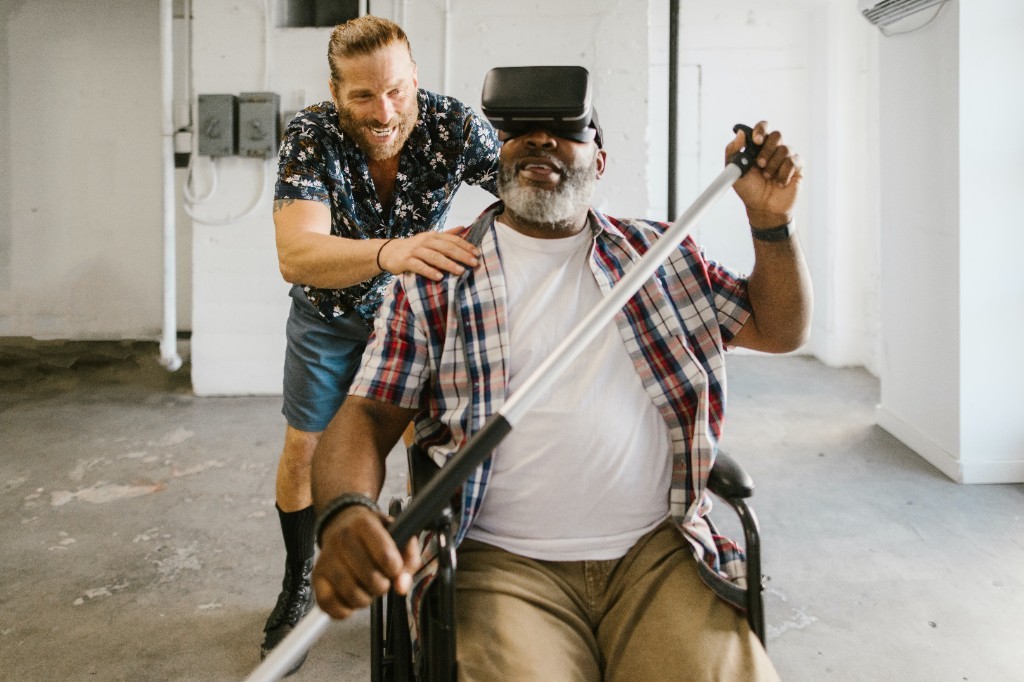

In recent years, there has been a significant advancement in the field of Artificial Intelligence (AI) and Augmented Reality (AR). These technologies have become increasingly popular and have the potential to enhance virtual experiences in various fields such as gaming, education, healthcare, and...
Digital Mind Learns to Speak 50 Languages in Just One Day
491
18.11.2025

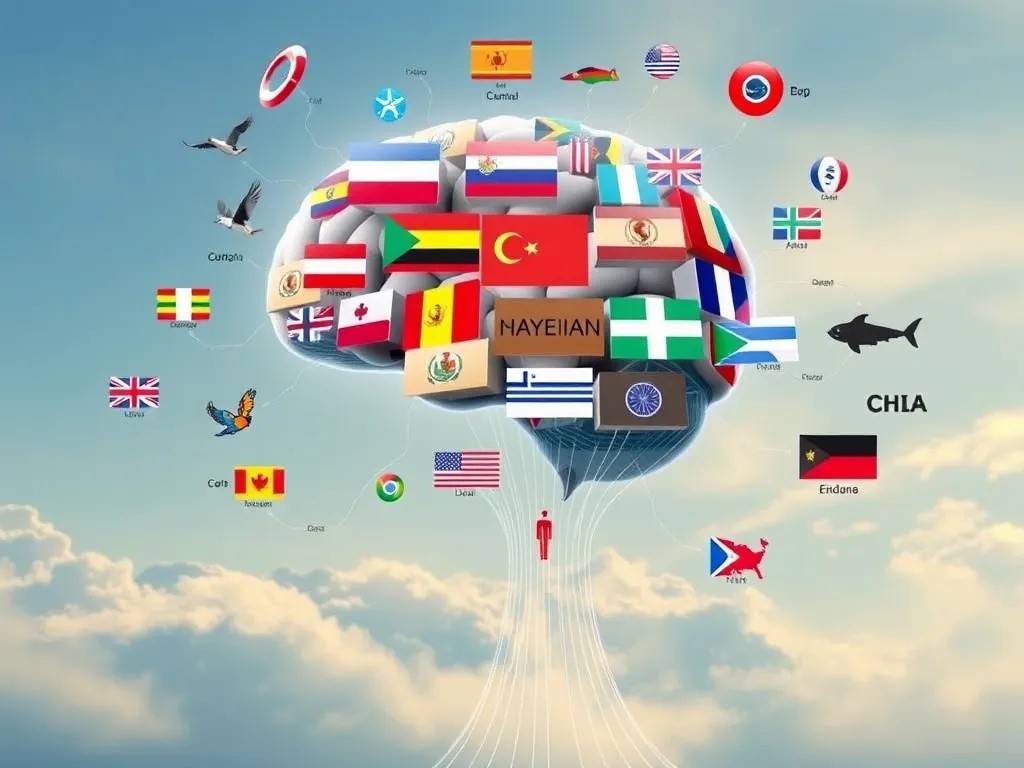
In a breakthrough that redefines our understanding of machine learning capabilities, researchers have developed an artificial intelligence system capable of acquiring functional proficiency in 50 distinct languages within a 24-hour period. This achievement represents a quantum leap in language acquisition technology, with profound implications for global communication, education, and cultural exchange.
The Architecture Behind Rapid Language Acquisition
The system, developed through collaboration between computational linguists and machine learning specialists, employs a novel neural architecture specifically designed for cross-linguistic pattern recognition. Unlike previous language models that required separate training for each language, this new approach identifies the underlying structural similarities between languages, allowing for exponential acceleration in acquisition rates.
Technical Innovations Enabling Rapid Learning
- Metalinguistic transfer learning – the ability to apply grammatical principles across language families
- Phonological pattern recognition – rapid adaptation to new sound systems
- Etymology-aware word embedding – leveraging shared word histories across related languages
- Unified morphological processing – recognizing common patterns in how words change form
- Cultural context integration – incorporating cultural knowledge that shapes language use
The system's training begins with exposure to linguistic universals—features common across all human languages—before proceeding through increasingly specific language features. This hierarchical approach allows the AI to establish a robust framework for understanding how languages function generally before tackling the idiosyncrasies of specific tongues.
From Theory to Practice: Real-World Performance
In controlled testing environments, the system has demonstrated remarkable capabilities across diverse linguistic tasks. After its 24-hour learning period, it successfully achieves:
- Conversational fluency equivalent to B1-B2 level on the Common European Framework
- Translation accuracy comparable to human translators for everyday content
- Cultural nuance recognition including idioms, humor, and formality levels
- Dialect adaptation within major language groups
- Code-switching abilities between related languages
Perhaps most impressively, the system demonstrates transferability of knowledge between languages that share etymological roots or grammatical structures. Learning Portuguese, for instance, accelerates the acquisition of Spanish, Romanian, and Italian to a degree that mimics human language learning advantages.
Applications Transforming Global Communication
The implications of this technology extend far beyond academic interest, promising to reshape how humans navigate linguistic diversity in numerous contexts:
Immediate Impact Areas
- Emergency response in multilingual regions – providing instant communication during crises
- International business negotiations – eliminating language barriers in real-time
- Tourism and travel – enabling frictionless interaction regardless of destination
- Diplomatic communications – ensuring nuanced understanding in sensitive contexts
- Cultural media consumption – making films, literature, and music accessible across language boundaries
Educational Revolution for Human Learners
While the AI itself demonstrates remarkable acquisition abilities, perhaps its most transformative aspect lies in how it may revolutionize human language learning. By analyzing the patterns and techniques that enable rapid machine learning, researchers are developing pedagogical approaches that dramatically accelerate human acquisition rates.
New Approaches to Language Education
Educational platforms incorporating insights from the AI research now offer:
- Personalized learning sequences based on a student's native language and previously acquired languages
- Emphasis on high-leverage grammatical patterns with maximum transferability
- Customized exposure to the minimal necessary vocabulary for functional communication
- Targeted practice on phonological features that most challenge speakers of specific language backgrounds
Early studies suggest these AI-informed approaches can reduce the time required to reach conversational proficiency by 40-60% compared to traditional language learning methods.
Challenges and Limitations
Despite its impressive capabilities, the system faces several limitations that researchers continue to address:
- Reduced effectiveness with language isolates that share few features with other languages
- Difficulty with highly context-dependent languages where cultural knowledge is inseparable from linguistic meaning
- Challenges in mastering tonal distinctions in languages like Mandarin, Vietnamese, and Yoruba
- Limited proficiency with languages having little digital presence or available training data
Additionally, questions remain about the depth of understanding versus breadth of coverage, with critics noting that while the system can operate across 50 languages, its grasp of cultural nuances and sophisticated expression may be shallower than specialists in individual languages.
The Future of Universal Translation
Looking forward, researchers are focusing on several key development areas:
Next Generation Capabilities
- Integration of visual context to understand language in environmental settings
- Real-time adaptation to individual speaking styles and regional dialects
- Preservation capabilities for endangered languages with limited speakers
- Development of "universal translator" devices for instantaneous spoken communication
Conclusion
The development of AI systems capable of mastering 50 languages in a day represents a watershed moment in both artificial intelligence and linguistics. Beyond the technical achievement, it offers a glimpse into a future where language barriers no longer limit human connection, commerce, or collaboration.
While true universal translation remains on the horizon, the rapid pace of advancement suggests that within years rather than decades, technology may effectively eliminate language barriers for the first time in human history—creating opportunities for cultural exchange and understanding on an unprecedented scale.