In recent years, there has been a significant advancement in the field of Artificial Intelligence (AI) and Augmented Reality (AR). These technologies have become increasingly popular and have the potential to enhance virtual experiences in various fields such as gaming, education, healthcare, and...
How a Smart Glove Helps Children With Cerebral Palsy Develop Fine Motor Skills
2
31.08.2026
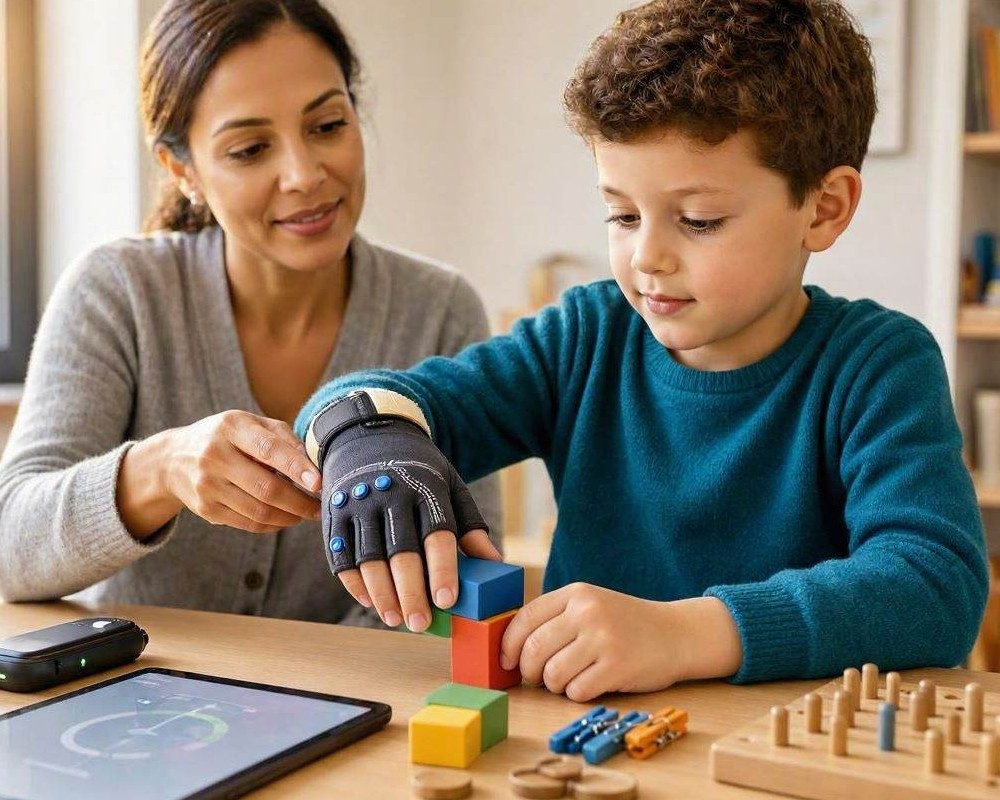
Children with cerebral palsy may experience muscle stiffness, weakness, involuntary movement, or limited coordination in the hands and fingers. These challenges can make everyday activities such as fastening buttons, holding a pencil, or using cutlery difficult. A smart rehabilitation glove can make fine motor practice more measurable and engaging by combining wearable sensors, interactive exercises, and immediate feedback.
What Is a Smart Rehabilitation Glove?
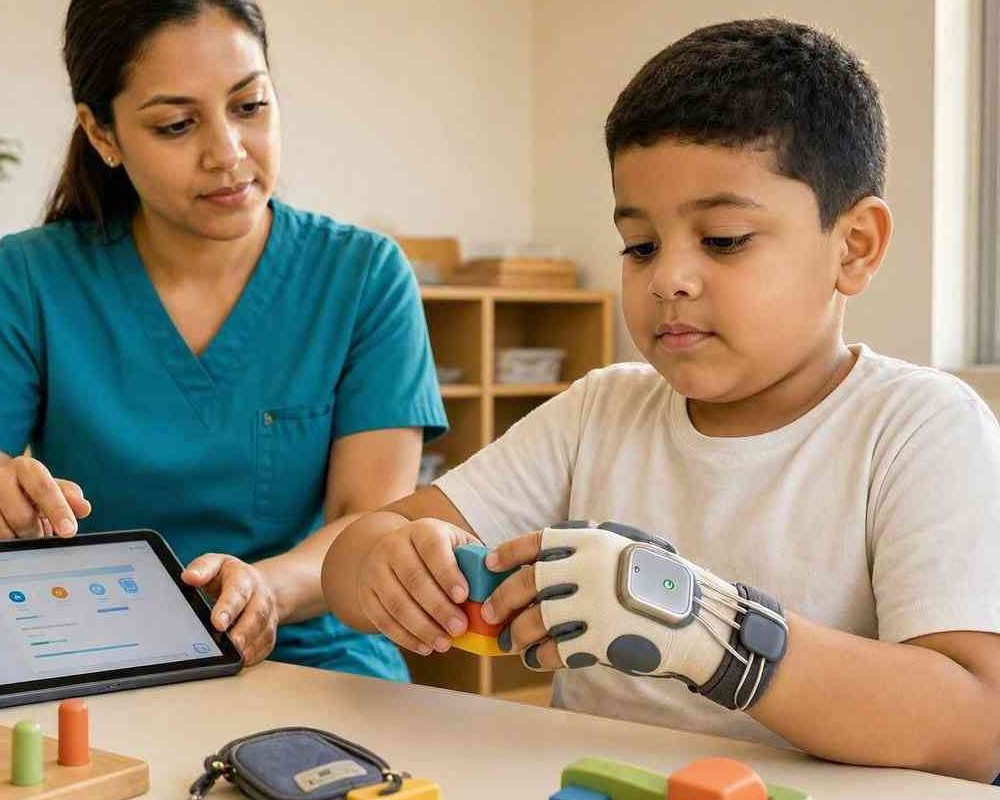
A smart glove is a wearable device designed to track or assist movements of the hand, fingers, and wrist. Depending on the model, it may contain bend sensors, motion sensors, pressure detectors, or small mechanical components that support movement. The glove can connect to a computer, tablet, or mobile application, where physical actions control games and therapeutic tasks.
Movement Tracking and Feedback
When a child bends a finger, rotates the wrist, or grips an object, the sensors collect information about the movement. Software may record range of motion, speed, accuracy, and repetition. Visual or auditory feedback then shows whether the task was completed successfully. This response helps children understand their movements while giving therapists objective information about performance.
Active and Assisted Training
Some gloves only measure voluntary movement, while robotic versions can gently assist finger flexion and extension. Assistance may help a child complete a movement pattern that would otherwise be difficult. The goal is not to replace active effort but to provide appropriate support while the child practices controlled, purposeful actions.
Benefits for Fine Motor Development
Fine motor development depends on frequent, focused practice. Repeating conventional exercises can become tiring, particularly for young children. Smart gloves can transform rehabilitation tasks into interactive experiences and encourage participation without losing the clinical purpose of training.
- Greater motivation: Games, scores, sounds, and virtual rewards can make repetitive hand exercises more enjoyable.
- Personalized difficulty: A therapist can adjust movement thresholds, assistance levels, session length, and task complexity.
- Measurable progress: Recorded data can reveal changes that may be difficult to notice during occasional clinical assessments.
- Functional practice: Exercises can target grasping, releasing, pinching, finger isolation, and wrist control.
How Smart Glove Therapy Is Used
Assessment and Goal Setting
Before training begins, an occupational therapist or physiotherapist evaluates muscle tone, joint mobility, sensation, hand preference, and functional ability. Goals should relate to meaningful activities, such as opening a lunchbox, manipulating classroom materials, or holding a toothbrush. Device settings can then be adapted to the child’s needs.
Short, Structured Sessions
Training is often most effective when sessions are brief, regular, and challenging without causing excessive fatigue. A child might practice reaching toward virtual objects, closing selected fingers, maintaining a grip, or releasing at a precise moment. Therapists can combine glove-based exercises with real objects so that digital skills transfer to daily life.
Home and Clinical Practice
Portable systems may support supervised home practice between appointments. However, caregivers need clear instructions about fitting the glove, selecting exercises, and recognizing discomfort. Clinicians should review the recorded results and modify the program as the child’s abilities change.
Safety and Practical Considerations
A smart glove should be treated as a rehabilitation tool rather than a universal solution. It must fit correctly and should not force joints beyond a comfortable range. Training should stop if the child develops pain, skin irritation, swelling, unusual stiffness, or persistent fatigue. Hygiene is also important, especially when a device is shared.
Families should consider the glove’s weight, calibration requirements, software accessibility, maintenance, and cost. Evidence for pediatric wearable robotics is promising but still developing, and outcomes vary according to the type of cerebral palsy, severity of impairment, training intensity, and device design.
A Useful Addition to Individualized Rehabilitation
Smart glove therapy can provide motivating practice and detailed information about hand movement, but it works best within a broader treatment plan. Occupational therapy, stretching, strength training, bimanual activities, and practice of everyday tasks remain important. With professional supervision and realistic goals, a smart glove can help children with cerebral palsy participate more actively in fine motor training and build skills that support greater independence.