In recent years, there has been a significant advancement in the field of Artificial Intelligence (AI) and Augmented Reality (AR). These technologies have become increasingly popular and have the potential to enhance virtual experiences in various fields such as gaming, education, healthcare, and...
Neural Network Detects Driver Fatigue by Analyzing Eye Behavior
477
05.04.2026

The Danger of Driver Fatigue
Driver fatigue is one of the major causes of road accidents worldwide. When people drive while tired, their reaction time slows down, concentration decreases, and the risk of making dangerous mistakes increases. In many cases, drivers do not realize how tired they have become until it is too late.
Long-distance travel, night driving, and irregular sleep schedules all contribute to fatigue behind the wheel. According to road safety studies, drowsy driving can impair attention and decision-making abilities in a way similar to alcohol intoxication.
To reduce these risks, researchers have been developing intelligent monitoring systems capable of detecting early signs of driver fatigue. One of the most promising approaches involves using neural networks to analyze the driver’s eyes and facial behavior in real time.
How Neural Networks Detect Fatigue
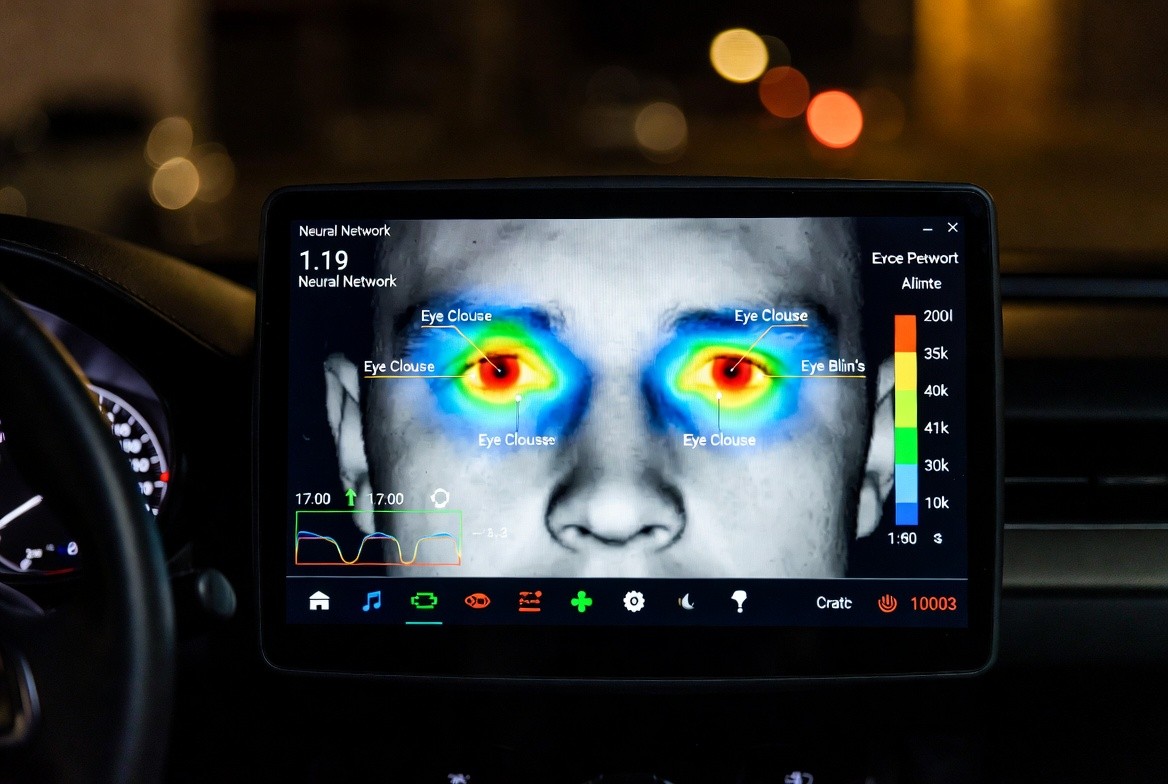
The fatigue detection system relies on cameras installed inside the vehicle, typically near the dashboard or rearview mirror. These cameras continuously monitor the driver’s face while the car is in motion. The captured video is analyzed by a neural network trained to recognize patterns associated with tiredness.
The AI system focuses especially on the eyes because eye behavior provides strong signals about a person’s level of alertness.
Main Indicators Analyzed by the System
- Frequency and duration of eye blinks
- Speed of eyelid movement
- Eye closure time
- Direction of gaze
- Head position and stability
When the system detects patterns that suggest fatigue, it can trigger a warning to alert the driver.
Eye Movement and Blink Analysis
One of the most reliable signs of fatigue is a change in blinking behavior. When people become tired, they tend to blink more slowly and keep their eyes closed for longer periods. These subtle changes may not be noticeable to the driver but can be detected by AI algorithms.
The neural network measures blink duration and calculates indicators such as the percentage of time that the eyes remain closed during driving. If this value rises above a certain threshold, the system recognizes it as a sign of drowsiness.
In addition to blinking patterns, the system analyzes gaze direction. If the driver’s eyes repeatedly drift away from the road or remain unfocused for extended periods, the algorithm interprets this as reduced attention.
Training the AI Model
To achieve accurate fatigue detection, neural networks must be trained using large datasets containing video recordings of drivers in different states of alertness. These datasets include examples of both attentive drivers and individuals experiencing fatigue.
Machine learning techniques allow the algorithm to identify subtle patterns in facial behavior that correspond to different levels of tiredness.
Types of Data Used for Training
- Video recordings of drivers in simulated environments
- Eye-tracking data from fatigue studies
- Real-world driving footage
- Sleep deprivation experiments
- Facial expression datasets
By learning from these examples, the neural network becomes capable of detecting fatigue with high accuracy.
Driver Warning Systems
When the system detects signs of fatigue, it activates a warning mechanism designed to alert the driver immediately. These warnings can take several forms depending on the vehicle design.
- Audible alarms or voice alerts
- Vibration in the steering wheel
- Visual notifications on the dashboard
- Recommendations to take a rest break
- Activation of driver assistance systems
In advanced vehicles, fatigue detection systems may also interact with autonomous driving features to help maintain safe vehicle control.
Benefits for Road Safety
Implementing AI-based fatigue detection technology offers several advantages for road safety. By identifying early signs of drowsiness, the system gives drivers an opportunity to rest before dangerous situations develop.
Transportation companies are particularly interested in this technology for monitoring long-distance drivers and reducing accident risks.
- Reduction of fatigue-related accidents
- Improved driver awareness of tiredness
- Safer long-distance transportation
- Better protection for passengers and pedestrians
- Support for driver assistance technologies
These systems are becoming increasingly common in modern vehicles as manufacturers focus on improving safety through intelligent technology.
The Future of AI Driver Monitoring
Driver monitoring technology is expected to evolve further in the coming years. Future systems may combine eye tracking with additional sensors that measure heart rate, facial temperature, and driving behavior.
Artificial intelligence may also analyze steering patterns and vehicle movements to detect subtle signs of reduced concentration. By combining multiple sources of data, these systems will be able to assess driver alertness even more accurately.
As vehicles become more connected and intelligent, fatigue detection systems will likely become a standard safety feature. Neural networks capable of analyzing eye behavior demonstrate how artificial intelligence can help prevent accidents and make roads safer for everyone.