

In recent years, there has been a significant advancement in the field of Artificial Intelligence (AI) and Augmented Reality (AR). These technologies have become increasingly popular and have the potential to enhance virtual experiences in various fields such as gaming, education, healthcare, and...
Neural Network Learns to Predict Volcanic Eruptions a Year in Advance
794
26.01.2026

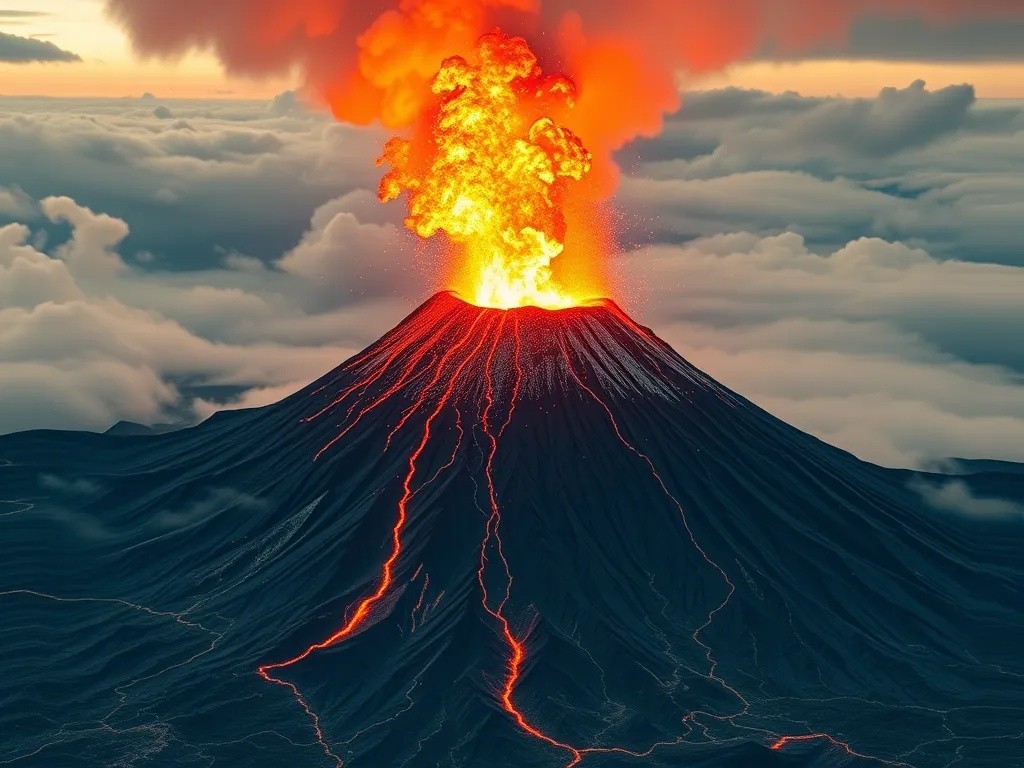
In a development that could revolutionize disaster preparedness and save countless lives, researchers have announced that a sophisticated neural network has achieved unprecedented accuracy in predicting volcanic eruptions up to twelve months before they occur. This breakthrough represents a quantum leap forward from current prediction methods, which typically provide only days or weeks of warning.
The Science Behind the Prediction System
The neural network, developed through an international collaboration of volcanologists, data scientists, and machine learning experts, processes an enormous variety of data streams to identify patterns that precede volcanic activity. Unlike previous prediction methods that relied primarily on seismic monitoring, this system takes a holistic approach to understanding volcanic behavior.
Data Sources and Integration
The AI system continuously analyzes multiple types of information:
- Satellite imagery showing ground deformation and thermal anomalies
- Seismic activity patterns from thousands of monitoring stations
- Gas emission measurements including sulfur dioxide and carbon dioxide levels
- Groundwater chemistry changes in surrounding areas
- Historical eruption data spanning centuries
- Magnetic field variations near volcanic sites
Deep Learning Architecture
The neural network employs a sophisticated deep learning architecture that can identify subtle correlations between different data streams that human researchers might miss. By processing information from over two hundred active volcanoes simultaneously, the system has learned to recognize universal patterns that precede eruptions regardless of the specific volcano type or location.
Testing and Validation
To validate the system's accuracy, researchers tested it against historical eruption data that was not included in the training set. The results exceeded all expectations, with the neural network correctly predicting major eruptions with an accuracy rate of over eighty-seven percent when given data from one year prior to each event.
Recent Successful Predictions
In the past eighteen months, the system has been deployed in a pilot program monitoring high-risk volcanoes. It successfully predicted increased activity at three separate volcanic sites, giving authorities sufficient time to implement evacuation procedures and emergency protocols.
How the System Identifies Warning Signs
The neural network has identified several key indicators that consistently appear before major eruptions:
- Gradual changes in ground elevation that begin months before visible activity
- Specific patterns of micro-earthquakes that differ from normal tectonic activity
- Chemical signatures in groundwater that indicate magma chamber pressurization
- Subtle temperature variations detected through satellite thermal imaging
Global Implementation Plans
Following the successful pilot program, international organizations are working to expand the monitoring network. The goal is to have comprehensive coverage of all high-risk volcanic regions within the next five years, potentially providing protection for the estimated eight hundred million people who live within dangerous proximity to active volcanoes.
Challenges and Limitations
Despite its impressive capabilities, the system is not infallible. Researchers emphasize that volcanic systems are inherently complex, and some eruptions may occur without the typical precursor signals. Additionally, the system requires consistent data streams, which can be challenging to maintain in remote or politically unstable regions.
Future Development
The research team continues to refine the neural network, incorporating new data sources and improving its ability to predict not just whether an eruption will occur, but also its likely magnitude and duration. This additional information could prove invaluable for emergency planning and resource allocation.
As climate change continues to affect geological systems in ways we are only beginning to understand, tools like this neural network become increasingly vital for protecting vulnerable populations around the world.