

In recent years, there has been a significant advancement in the field of Artificial Intelligence (AI) and Augmented Reality (AR). These technologies have become increasingly popular and have the potential to enhance virtual experiences in various fields such as gaming, education, healthcare, and...
Neural Network Predicts Factory Machine Breakdowns a Week in Advance
85
24.08.2026
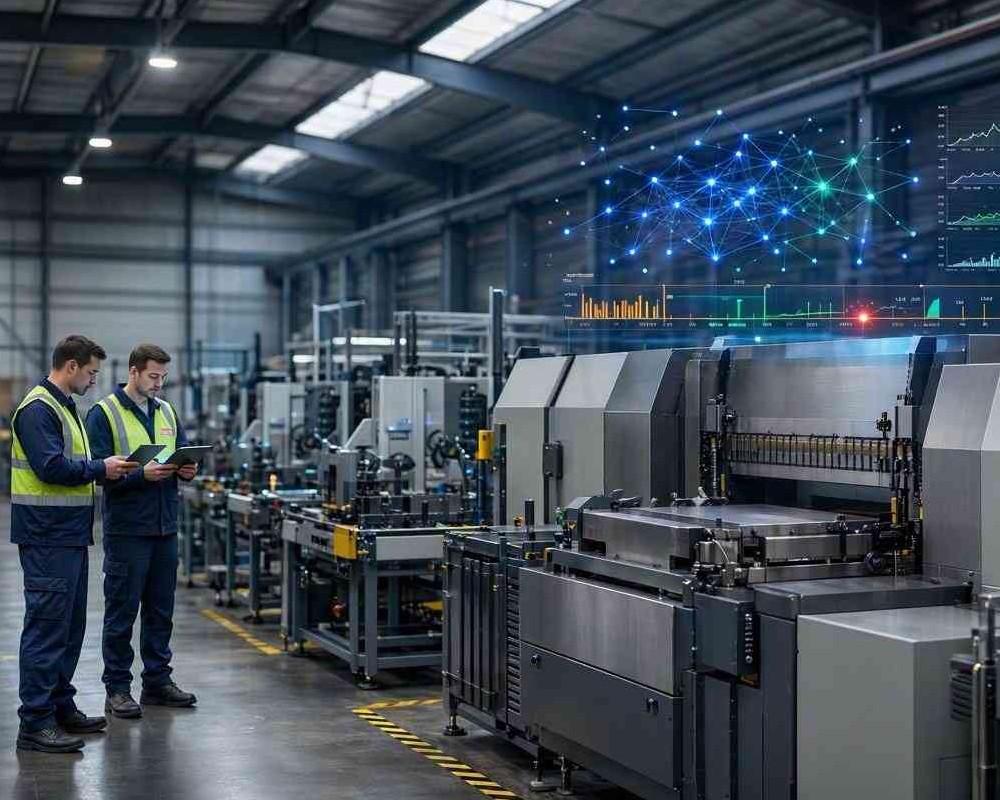
An industrial neural network can now identify warning signs of equipment failure up to seven days before a factory machine stops working. By analyzing sensor data continuously, the system gives maintenance teams enough time to inspect components, order spare parts, and schedule repairs without disrupting production. This approach turns maintenance from a reactive expense into a planned operational process.
How the Predictive Maintenance System Works
Modern production equipment generates large volumes of data through vibration sensors, temperature probes, acoustic monitors, pressure gauges, and electrical meters. A neural network processes these signals together rather than evaluating each measurement in isolation. This allows it to detect subtle relationships that conventional threshold-based alarms may miss.
Learning Normal Machine Behavior
During training, the model studies historical operating records, including periods of stable performance and data collected before documented failures. It learns how a healthy machine behaves under different loads, speeds, materials, and environmental conditions. When live readings begin to diverge from those patterns, the network calculates the probability of a breakdown within the following week.
Detecting Weak Signals Before Failure
A single temperature increase may not indicate a serious problem. However, a small temperature rise combined with changing vibration frequencies and higher motor current can reveal bearing wear, lubrication problems, or shaft misalignment. Neural networks are effective at recognizing these multidimensional patterns before the damage becomes obvious to operators.
Why a Seven-Day Warning Matters
Traditional maintenance strategies rely on fixed service intervals or repairs after equipment fails. Scheduled servicing can replace parts that still have useful life, while reactive maintenance often causes expensive downtime. A one-week forecast provides a practical planning window without requiring teams to act on every minor anomaly.
- Technicians can confirm the predicted fault through a targeted inspection.
- Replacement components can be ordered before an emergency occurs.
- Repairs can be aligned with shifts, weekends, or planned production stops.
- Manufacturers can reduce overtime, express shipping, and secondary damage.
- Production planners can redirect work to other machines when necessary.

Improved Safety and Product Quality
Early detection also supports safer working conditions. Mechanical degradation can lead to overheating, leaks, tool breakage, or unstable movement. Addressing these risks before failure protects employees and surrounding equipment. It can also prevent declining machine accuracy from producing defective goods before operators notice a quality issue.
Building a Reliable Forecasting Model
Prediction accuracy depends on more than the neural network itself. Sensor placement, data quality, maintenance records, and failure labels all influence performance. Missing readings or incorrectly documented repairs can teach the model misleading patterns. Factories therefore need a consistent process for collecting, cleaning, and validating operational data.
Combining AI With Engineering Expertise
The system should support maintenance engineers rather than replace them. An effective dashboard explains which signals contributed to an alert, identifies the affected machine, and shows how risk is changing over time. Engineers can then compare the forecast with inspection results and operating context.
- Collect baseline data across normal production conditions.
- Connect sensor records with verified maintenance events.
- Train and test the model on separate time periods.
- Set alert levels based on operational cost and safety risk.
- Retrain the network as equipment and processes change.
Business Impact for Smart Factories
A neural network that predicts breakdowns a week ahead can increase equipment availability, extend component life, and stabilize production schedules. The greatest value comes from integrating forecasts with maintenance software, inventory systems, and daily planning. When alerts lead to timely, documented action, predictive maintenance becomes a measurable source of efficiency rather than an isolated AI experiment.