

In recent years, there has been a significant advancement in the field of Artificial Intelligence (AI) and Augmented Reality (AR). These technologies have become increasingly popular and have the potential to enhance virtual experiences in various fields such as gaming, education, healthcare, and...
Neural Networks Decrypt Ancient Mayan Hieroglyphs
1187
21.02.2026
Revolutionary Discovery in Archaeology
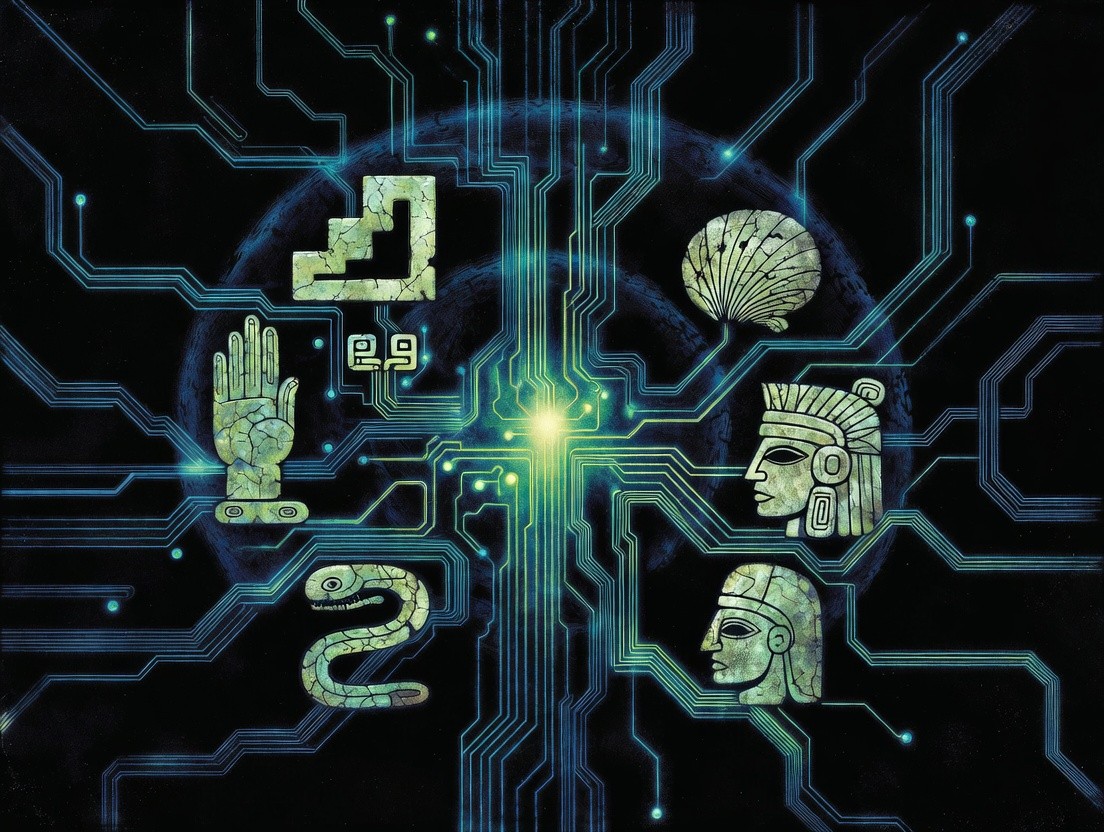
In a groundbreaking achievement that bridges ancient history and modern technology, artificial intelligence has successfully deciphered a significant portion of Mayan hieroglyphic writing. Neural networks trained on thousands of decoded Mayan inscriptions have unlocked previously unintelligible texts, providing unprecedented insights into Mayan civilization, politics, astronomy, and daily life.
The Challenge of Mayan Writing
Historical Context
The Maya civilization developed one of the world's most sophisticated writing systems, used from roughly 300 BCE until the Spanish conquest in the 1500s. Unlike alphabetic systems, Mayan hieroglyphs combine logographic and syllabic elements, with each glyph potentially representing complete words or syllabic sounds. This complexity has made decipherment extraordinarily difficult.
Previous Decryption Efforts
While scholars have made progress in understanding Mayan script over the past century, many texts remained partially or completely unreadable. The process of manual decipherment is painstaking and relies on comparative analysis, linguistic knowledge, and historical context. Even with dedicated researchers working for decades, many inscriptions contained mysterious passages that resisted interpretation.
How Neural Networks Solved the Problem
Training Data and Methodology
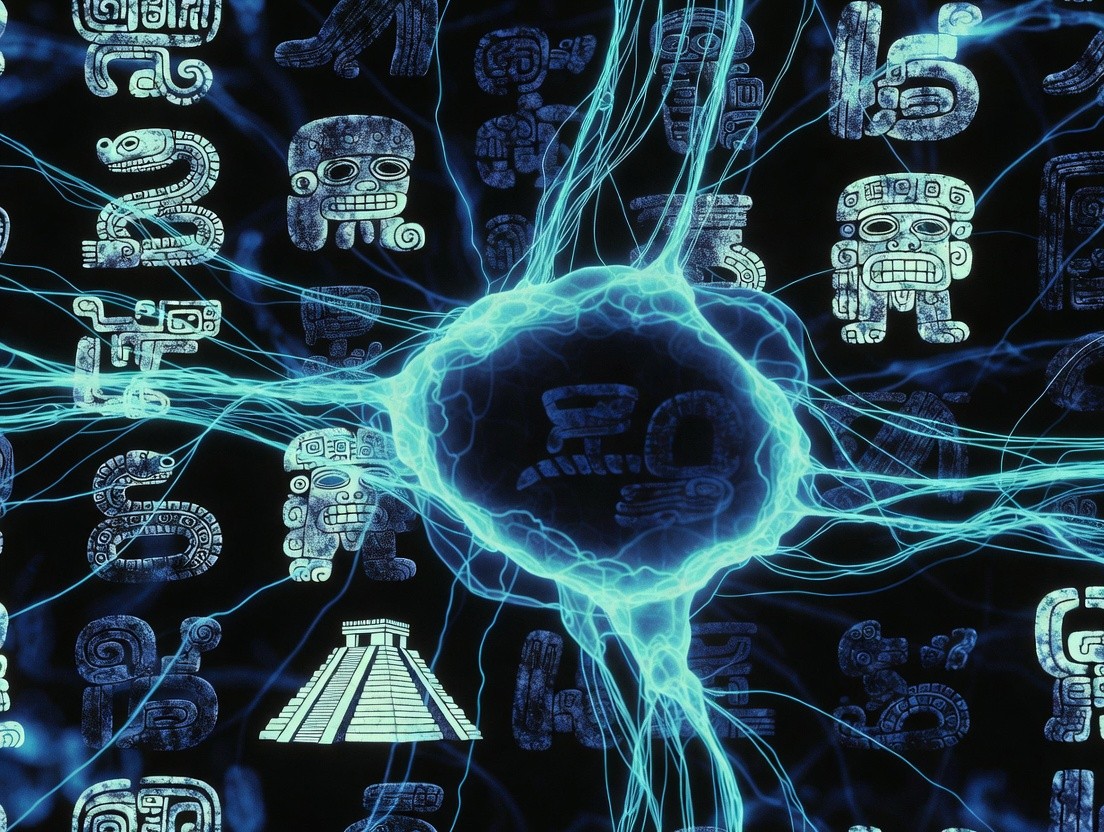
Researchers trained deep neural networks on an extensive database of Mayan hieroglyphs where the meanings were already known. The networks learned to recognize patterns, contextual relationships, and variations in glyph representation across different time periods and regions. Machine learning algorithms identified subtle connections that human researchers might overlook.
Key Technical Features
The AI systems employed included:
- Convolutional neural networks for glyph image recognition
- Recurrent neural networks for sequence analysis and context understanding
- Natural language processing adapted for hieroglyphic text
- Comparative linguistics algorithms
Major Discoveries and Insights
Political and Historical Information
The newly deciphered texts have revealed detailed information about Mayan political structures, royal dynasties, and inter-city relationships. Scholars have discovered previously unknown diplomatic exchanges between city-states, records of alliances and conflicts, and genealogical information about Maya rulers. These discoveries fundamentally reshape our understanding of Mayan civilization's political complexity.
Scientific and Astronomical Knowledge
Neural network decryption has unveiled remarkable Mayan astronomical observations and calculations. The texts describe celestial events with extraordinary precision, demonstrate advanced mathematical understanding, and document a sophisticated calendar system. These findings confirm that the Maya possessed scientific knowledge that rivaled contemporary civilizations in other parts of the world.
Daily Life and Culture
Beyond monumental inscriptions, deciphered texts provide intimate glimpses into Mayan society—religious practices, agricultural techniques, trade routes, and social hierarchies. Personal correspondence, commercial records, and cultural narratives have been recovered, offering a multifaceted picture of Maya life.
Collaboration Between AI and Scholars
Enhanced Research Process
The most effective approach combines artificial intelligence capabilities with human expertise. Archaeologists and linguists work alongside AI systems, using machine learning to generate hypotheses about text meanings, which human experts then evaluate and refine. This collaborative approach leverages the strengths of both artificial and human intelligence.
Verification and Peer Review
All AI-generated decipherments undergo rigorous scholarly review before being accepted as valid translations. The process maintains academic rigor while benefiting from computational speed and pattern recognition capabilities that exceed human capacity.
Implications for Archaeology and History
This breakthrough demonstrates artificial intelligence's potential in humanities research. The success with Mayan hieroglyphs suggests similar approaches could decipher other ancient writing systems still partially understood, including Egyptian hieroglyphics, Linear A from Minoan Crete, and proto-Elamite cuneiform.
Conclusion
Neural networks have opened new chapters in understanding ancient Mayan civilization, transforming archaeology from a discipline limited by manual analysis to one empowered by artificial intelligence. As these technologies continue developing, we may unlock the secrets of other lost civilizations, fundamentally expanding human knowledge about our shared past. The convergence of ancient history and cutting-edge technology represents an exciting frontier in both archaeology and artificial intelligence research.