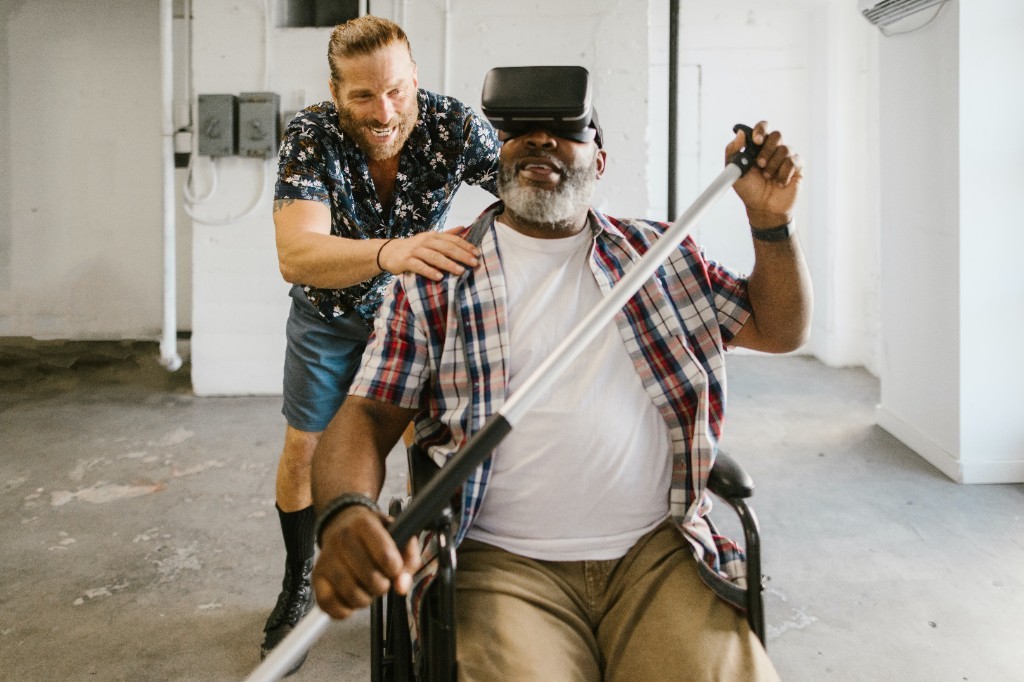

In recent years, there has been a significant advancement in the field of Artificial Intelligence (AI) and Augmented Reality (AR). These technologies have become increasingly popular and have the potential to enhance virtual experiences in various fields such as gaming, education, healthcare, and...
Pocket Translator Understands Slang and Local Expressions
396
10.12.2025

Language translation technology has taken a giant leap forward with the introduction of advanced pocket translators capable of understanding and accurately interpreting slang, idioms, and local expressions across dozens of languages. These sophisticated devices are transforming cross-cultural communication, allowing for more authentic and nuanced exchanges than ever before possible with translation technology.
Beyond Literal Translation: The Contextual Revolution
Traditional translation tools have long struggled with the non-literal aspects of language—the colorful idioms, cultural references, and evolving slang that make up a significant portion of everyday conversation. A phrase like "it's raining cats and dogs" or "I'm feeling under the weather" would typically be translated literally, resulting in confusion rather than clarity.
The new generation of pocket translators addresses this fundamental limitation through a combination of advanced neural networks, massive contextual databases, and real-time cultural adaptation algorithms. These systems don't simply translate words; they interpret meaning based on cultural context, speaker demographics, geographic location, and conversational setting.
How It Works: Technical Foundations
At the heart of these devices are several breakthrough technologies working in concert:
- Contextual neural processing: Rather than translating sentences in isolation, the system analyzes entire conversations to establish context.
- Regional linguistic mapping: The translator incorporates datasets of region-specific expressions, slang, and cultural references.
- Sentiment analysis: Advanced algorithms detect emotional overtones and ensure they're preserved in translation.
- Real-time learning: The system continually updates its databases based on new expressions encountered during use.
- Sociolinguistic profiling: Adapts translations based on detected age groups, social contexts, and relationship dynamics.
Real-World Applications and Impact
These advanced translators are already transforming numerous fields where nuanced communication across language barriers is essential.
Tourism and Travel
For travelers, these devices offer unprecedented access to authentic local experiences. Rather than being limited to tourist areas where English is spoken, visitors can confidently venture into local neighborhoods, understanding and participating in genuine cultural exchanges.
In Tokyo's vibrant Shinjuku district, for example, American tourists have reported engaging in complex discussions about local politics with ramen shop owners, understanding humor-laden conversations in izakayas, and navigating slang-heavy interactions with younger Japanese citizens—all experiences that would have been virtually impossible with previous translation technology.
International Business
The business impact has been equally significant. Negotiation and relationship building across cultures often depend on understanding subtle conversational cues, humor, and indirect communication styles. Companies report more successful international partnerships when using these advanced translators, particularly in cultures where indirect communication is prevalent.
A Swedish manufacturing firm recently attributed a successful joint venture in Brazil to their negotiation team's use of advanced translation technology, which allowed them to understand cultural-specific business idioms and relationship-building conversational patterns that previous translators would have missed entirely.
Educational and Cultural Exchange
Educational institutions have embraced these devices for international exchange programs. Students report deeper cultural immersion and more meaningful connections with host families and local peers when they can understand and participate in casual, slang-rich conversations typical among young people.
University study-abroad programs in particular have noted that students using advanced translators develop stronger language skills over time, rather than becoming dependent on the technology. This counter-intuitive finding seems to result from the contextual explanations the devices provide, which help users understand why certain expressions work the way they do.
Key Features and Capabilities
Dialect and Accent Recognition
Unlike earlier translation systems that struggled with regional accents and dialects, current models excel at identifying and adapting to linguistic variations. A single language like Spanish, with its numerous national and regional varieties, can be accurately processed regardless of whether the speaker is from Madrid, Mexico City, or Buenos Aires.
The technology identifies not only region-specific vocabulary but also distinct pronunciation patterns, grammatical variations, and unique cultural references associated with different dialect groups.
Age-Appropriate Translation
One of the most impressive features is the ability to provide age-appropriate translations. When young people use current slang, the system can translate it into equivalent youth expressions in the target language. Similarly, formal or professional language is matched with corresponding registers in translation.
This capability extends to historical contexts as well. Some advanced models can even adjust for time period, translating contemporary language into historically appropriate expressions when discussing historical subjects, or vice versa.
Cultural Context Explanations
Beyond simple translation, these devices provide optional cultural context explanations for expressions that might otherwise be confusing. If a Japanese person mentions "reading the air" (空気を読む, kuuki wo yomu), the translator not only provides the English equivalent of "reading between the lines" but can also explain the cultural importance of this concept in Japanese social interactions.
Limitations and Future Developments
Despite their impressive capabilities, current systems still face certain challenges:
- Emerging slang: Brand new expressions may have a short delay before being incorporated into the system.
- Highly specialized jargon: Some professional or niche hobby terminology may still require specialized translation modules.
- Multilingual group conversations: Managing multiple languages simultaneously remains computationally challenging.
- Power requirements: The sophisticated processing requires frequent recharging for intensive use.
- Privacy concerns: The learning capabilities raise questions about conversation data storage and usage.
Next-Generation Capabilities
Researchers are already working on next-generation features to address current limitations:
- Neural implant interfaces: Direct neural connections for even more natural translation experiences.
- Expanded paralinguistic processing: Better interpretation of tone, sarcasm, and emotional subtext.
- Historical language modes: Accurate translation of historical texts with period-appropriate language.
- Multiparty coordination: Seamless handling of group conversations in multiple languages.
- Fully localized processing: Complete on-device processing to address privacy concerns.
The advanced pocket translator represents a watershed moment in human communication technology. By bridging not just language barriers but cultural and contextual divides, these devices are enabling more authentic human connections across cultures. As the technology continues to mature, we can anticipate even more sophisticated capabilities that further reduce miscommunication and foster deeper cross-cultural understanding—potentially transforming international relations at both personal and professional levels.