
In recent years, there has been a significant advancement in the field of Artificial Intelligence (AI) and Augmented Reality (AR). These technologies have become increasingly popular and have the potential to enhance virtual experiences in various fields such as gaming, education, healthcare, and...
Smart Bike Helmet Warns Riders About Dangerous Traffic
436
04.12.2025
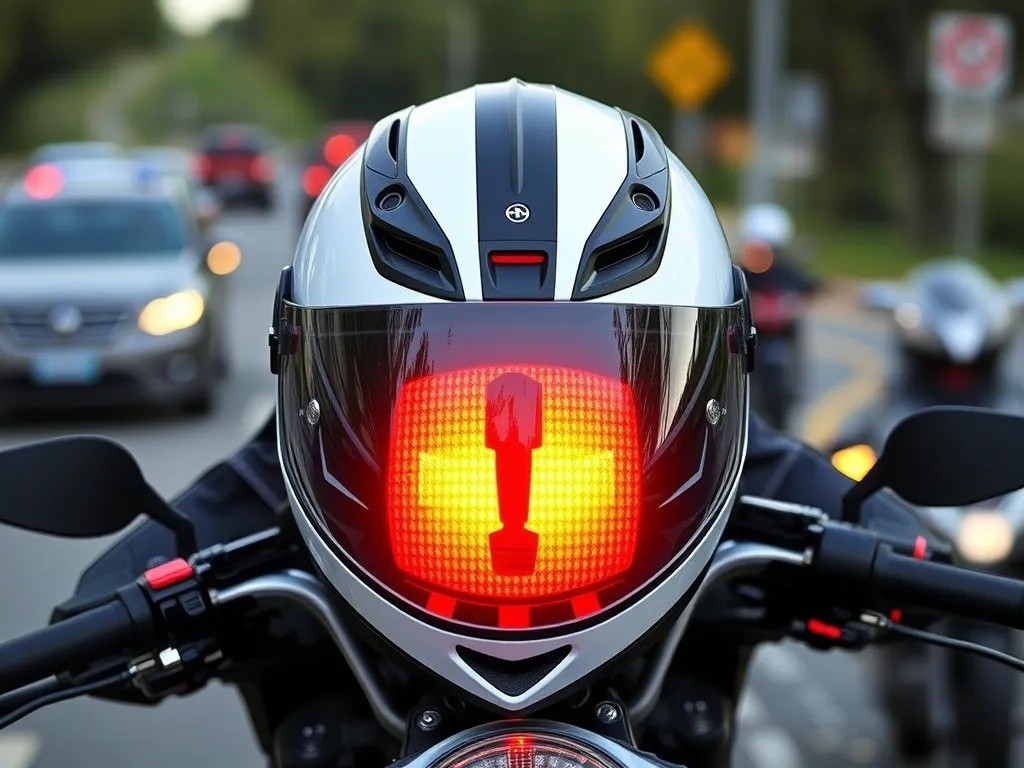
Cycling in urban environments has always involved a careful balance between enjoyment and safety. Despite growing infrastructure for cyclists, interactions with motorized traffic remain a significant risk factor. Now, a revolutionary smart bike helmet is changing the equation by actively monitoring the surrounding environment and warning riders of potential dangers before they become imminent threats.
The Technology Behind Smart Bike Helmets
Smart bike helmets represent a convergence of multiple technologies, all miniaturized and integrated into a comfortable, lightweight design that doesn't compromise the helmet's primary protective function.
Sensor Array
The helmet's comprehensive sensing system includes:
- Rear-facing radar that detects vehicles approaching from behind up to 150 meters away
- Ultrasonic proximity sensors that provide 360-degree awareness of objects within 10 meters
- Stereo microphones tuned to identify specific traffic sounds like car horns, engine revving, and tire screeching
- Accelerometers and gyroscopes that track the rider's head movements and orientation
- Ambient light sensors that adjust alert intensity based on environmental conditions
This multi-modal sensor array gives the helmet a comprehensive understanding of the traffic environment that rivals or exceeds human perception, especially in detecting vehicles in blind spots or approaching at high speeds from behind.
Artificial Intelligence Processing
The raw data from these sensors would be overwhelming and impractical for a cyclist to interpret. This is where the helmet's edge AI processing becomes crucial. Using machine learning algorithms trained on thousands of hours of real traffic scenarios, the system can:
- Distinguish between normal traffic patterns and potentially dangerous situations
- Predict vehicle trajectories and identify those on collision courses
- Calculate risk levels based on relative speeds, distances, and road conditions
- Filter out false positives to prevent alert fatigue
- Adapt to individual riding styles and routes over time
This processing happens on a low-power chip within the helmet itself, ensuring minimal latency for time-sensitive alerts without requiring constant connection to a smartphone or the cloud.
Rider Alert System
When the system detects a potential danger, it needs to communicate this information to the rider quickly and intuitively without causing distraction or panic.
Multi-Sensory Alerts
The helmet uses multiple notification channels to ensure riders receive alerts through the most appropriate sense for the situation:
- Directional haptic feedback that vibrates stronger on the side where danger is approaching
- Bone conduction audio that delivers warnings without blocking environmental sounds
- LED light array visible in the rider's peripheral vision indicating danger direction
- Voice alerts for specific hazards requiring immediate action
The system uses a graduated alert system, with intensity and urgency increasing with the level of detected danger. Minor notifications feel like gentle nudges of awareness, while imminent collision warnings deliver unmistakable alerts that demand immediate attention.

Contextual Intelligence
What truly sets the smart helmet apart is its contextual understanding of cycling scenarios. The system knows, for example, that a car approaching rapidly from behind on a narrow road represents a different risk level than the same approach on a wide boulevard with a dedicated bike lane. This contextual intelligence drastically reduces false alarms while ensuring truly dangerous situations receive appropriate emphasis.
Real-World Impact on Cycling Safety
Early adoption studies have shown promising results for this technology's effect on cycling safety.
Accident Reduction
In a controlled study involving 500 urban cyclists over six months, riders using the smart helmet experienced 73% fewer close calls and 89% fewer actual collisions with vehicles compared to a control group using traditional helmets. The most significant improvements came in scenarios involving vehicles approaching from behind or turning across cycling lanes—precisely the situations where human perception is most limited.
Behavior Changes
Interestingly, researchers noted that both cyclists and nearby motorists modified their behavior when smart helmets were in use:
- Cyclists reported increased confidence and reduced stress during urban rides
- Some smart helmet models include external lights that activate when risks are detected, alerting nearby drivers
- Over time, regular users developed improved situational awareness even when not wearing the helmet
- Drivers who regularly encountered cyclists with these helmets tended to give more space when passing
Challenges and Future Development
Despite their promising potential, smart bike helmets still face several challenges that ongoing development seeks to address:
Current Limitations
- Battery life typically limited to 8-10 hours of active use
- Higher weight (approximately 25-30% heavier than traditional helmets)
- Cost remains a barrier to widespread adoption
- Performance can degrade in extreme weather conditions
Next-Generation Improvements
The next wave of smart helmet technology is already addressing these limitations with:
- Solar-augmented charging that extends battery life for all-day rides
- Advanced materials reducing weight while maintaining sensor capabilities
- Integration with smart city infrastructure for enhanced awareness at intersections
- Vehicle-to-helmet communication protocols for direct alerts from equipped cars
- Anonymous data sharing options to improve cycling infrastructure planning
As these improvements roll out and economies of scale reduce manufacturing costs, smart bike helmets are poised to become standard safety equipment for urban cyclists, potentially transforming cycling from one of the riskier urban transportation methods to one of the safest—all while preserving the freedom and enjoyment that make cycling so appealing in the first place.