

In recent years, there has been a significant advancement in the field of Artificial Intelligence (AI) and Augmented Reality (AR). These technologies have become increasingly popular and have the potential to enhance virtual experiences in various fields such as gaming, education, healthcare, and...
Smart Mattress Technology: Monitoring Sleep Quality and Optimal Wake Times
1072
26.02.2026
The Revolution in Sleep Science
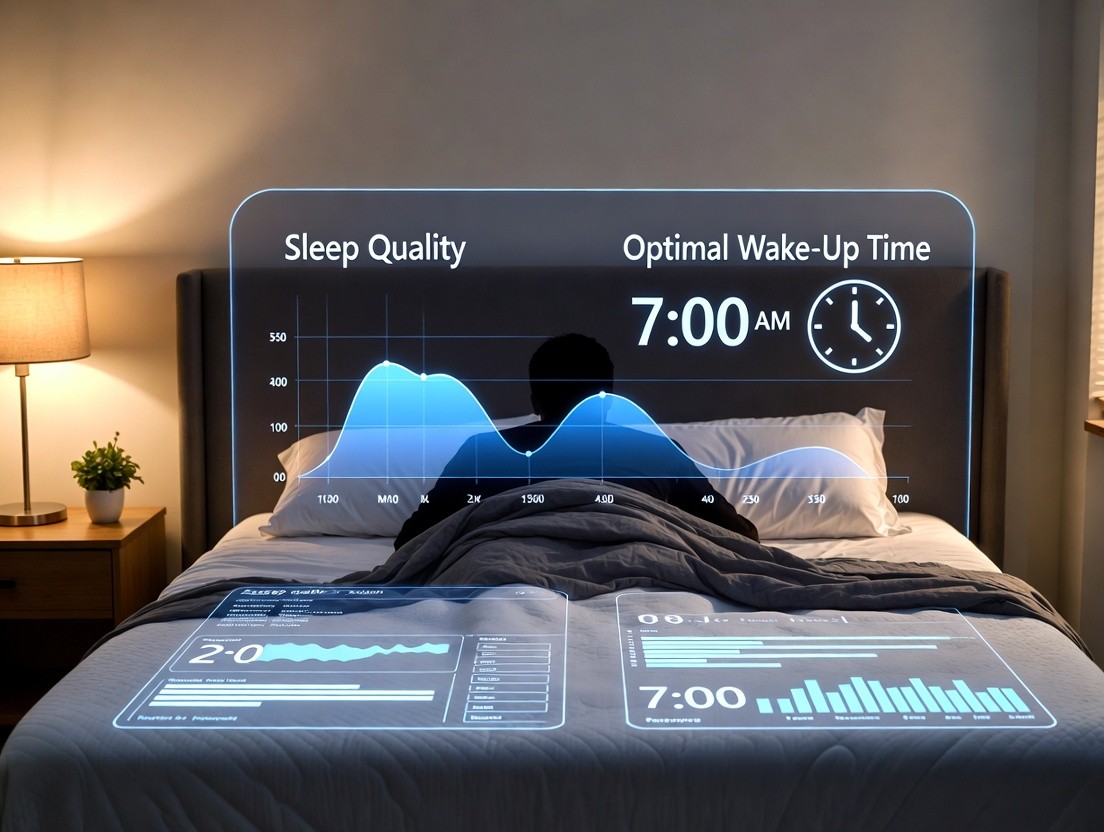
Sleep quality profoundly impacts overall health and productivity, yet most people have little understanding of their nightly sleep patterns. Smart mattresses represent a breakthrough technology that combines embedded sensors, artificial intelligence, and sleep science to provide comprehensive sleep monitoring. These intelligent beds track sleep stages, movement patterns, heart rate, and breathing, then wake users at optimal moments within their sleep cycles.
How Smart Mattress Technology Works
Embedded Sensor Systems
Modern smart mattresses contain an array of advanced sensors distributed throughout the mattress surface and structure. These sensors detect body position, movement, pressure points, heart rate, respiratory rate, and environmental factors like temperature and humidity. Data is collected continuously throughout the night and transmitted to processing systems that analyze sleep patterns in real-time.
Sleep Stage Detection
Smart mattresses distinguish between different sleep stages:
- Light sleep (NREM Stage 1 and 2)
- Deep sleep (NREM Stage 3)
- REM sleep (rapid eye movement)
- Awake periods during sleep
Key Features and Benefits
Sleep Quality Analysis
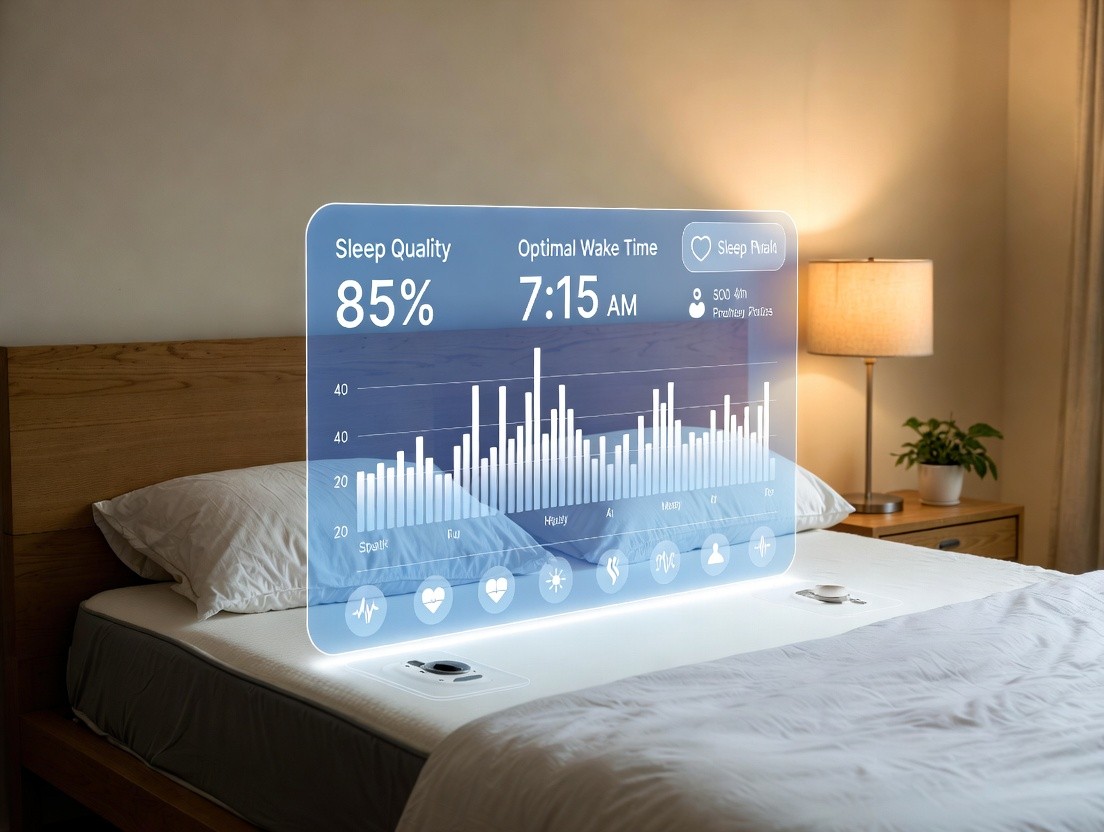
Smart mattresses provide detailed reports on sleep quality metrics including sleep duration, consistency, and fragmentation. Users receive comprehensive data showing how much time they spend in each sleep stage and how their patterns correlate with daily activities, dietary choices, and stress levels. This information enables people to identify factors that improve or degrade sleep quality.
Intelligent Wake-Up System
One of the most revolutionary features is the smart alarm system. Rather than waking users at a fixed time during potentially deep sleep, the mattress monitors sleep cycles and wakes users during light sleep phases when rousing is less disruptive. This approach results in users feeling significantly more rested despite potentially sleeping for the same duration or less. Waking during light sleep rather than deep sleep stages dramatically improves morning alertness and mood.
Health Insights
Smart mattress technology can detect potential health issues by monitoring changes in sleep patterns, breathing irregularities suggesting sleep apnea, and heart rate variations. Some systems alert users to concerning patterns that warrant medical attention, serving as an early warning system for health problems.
Real-World Applications
Improving Sleep Habits
Users leveraging smart mattress data report significant improvements in sleep quality and daytime functioning. Athletes use this technology to optimize recovery between training sessions. Shift workers manage the challenges of irregular sleep schedules more effectively with data-driven insights. Individuals with insomnia track progress as they implement interventions to improve sleep quality.
Personalized Sleep Recommendations
Advanced smart mattress systems provide personalized recommendations based on collected data. The AI algorithms might suggest adjusting sleep schedules, modifying bedroom temperature, reducing caffeine intake, or implementing relaxation techniques specifically tailored to individual sleep patterns and needs.
Technical Integration
Smart Home Connectivity
Premium smart mattresses integrate with broader smart home ecosystems. They can control lighting conditions, adjust room temperature, manage white noise systems, and coordinate with other health monitoring devices. This ecosystem approach creates an environment optimized for sleep quality.
Data Privacy and Security
Manufacturers of smart mattresses have implemented robust security measures to protect sensitive health data. Encryption protocols, secure cloud storage, and user privacy controls ensure that intimate sleep data remains confidential and under user control.
Current Limitations and Future Development
Accuracy Considerations
While smart mattress technology is advancing rapidly, measurement accuracy varies between different models. Some systems provide medical-grade accuracy comparable to laboratory sleep studies, while others offer useful but approximate measurements. Users should understand the specific capabilities and limitations of their chosen system.
Future Possibilities
Emerging developments include integration with prescription medications that affect sleep, analysis of dream patterns through eye movement monitoring, and predictive systems that anticipate sleep quality before users go to bed. As machine learning algorithms improve, personalized sleep optimization will become increasingly sophisticated.
Conclusion
Smart mattress technology represents a paradigm shift in how people understand and improve their sleep. By providing objective data about sleep patterns and waking users at optimal times, these intelligent beds enhance both sleep quality and daily functioning. As technology becomes more affordable and widespread, smart mattresses will likely become standard sleep solutions for health-conscious individuals seeking better rest and improved overall wellbeing.