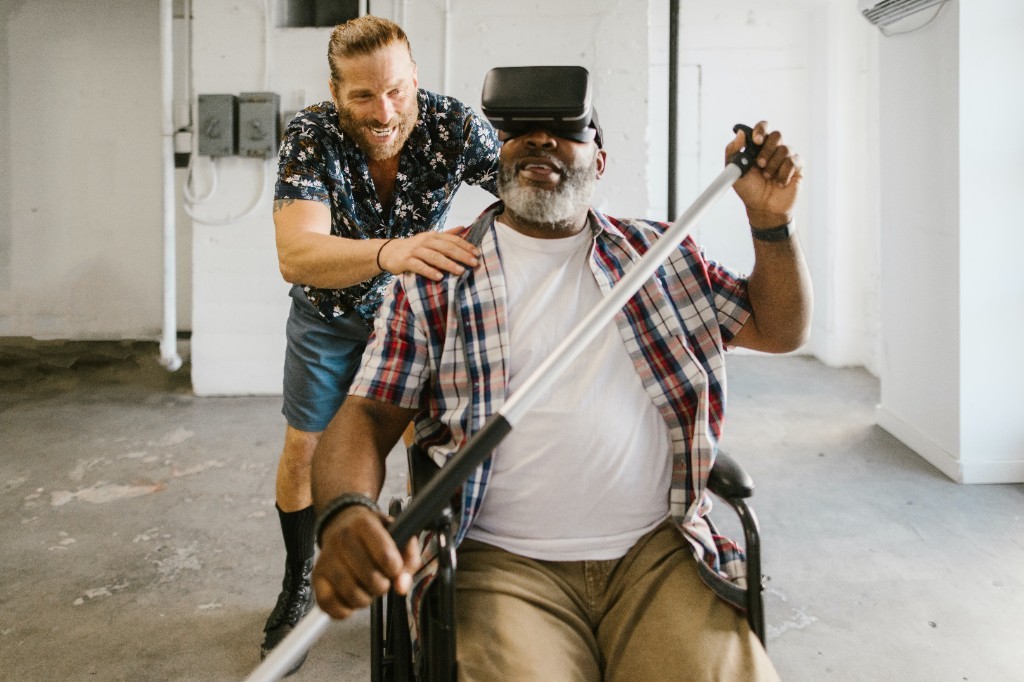
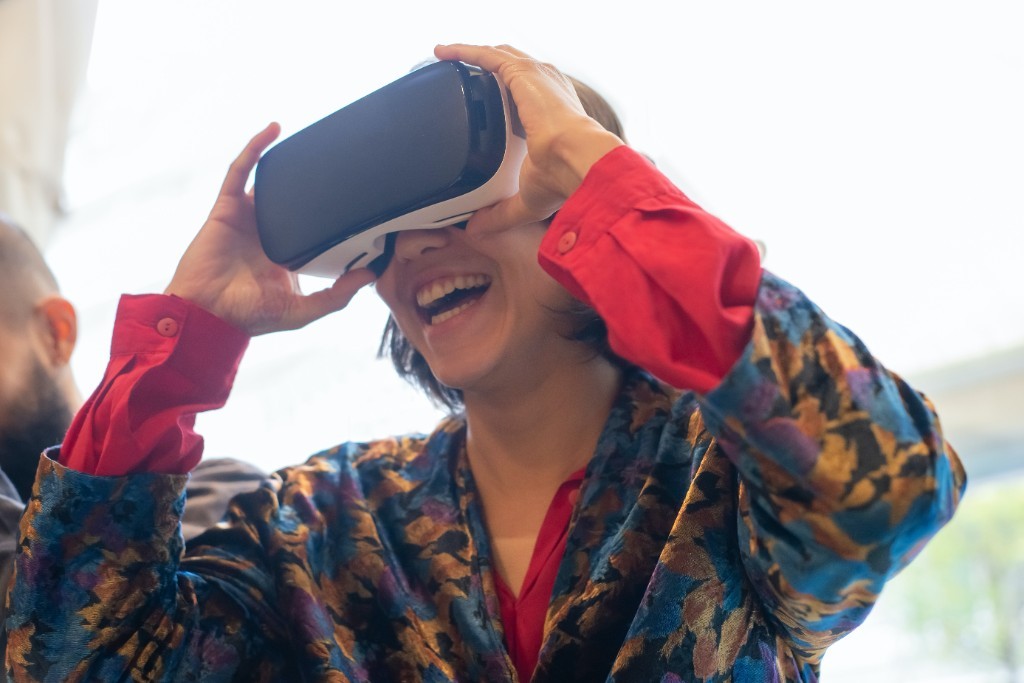
In recent years, there has been a significant advancement in the field of Artificial Intelligence (AI) and Augmented Reality (AR). These technologies have become increasingly popular and have the potential to enhance virtual experiences in various fields such as gaming, education, healthcare, and...
Virtual Driving Teacher Makes Learning To Drive Less Scary
489
05.01.2026
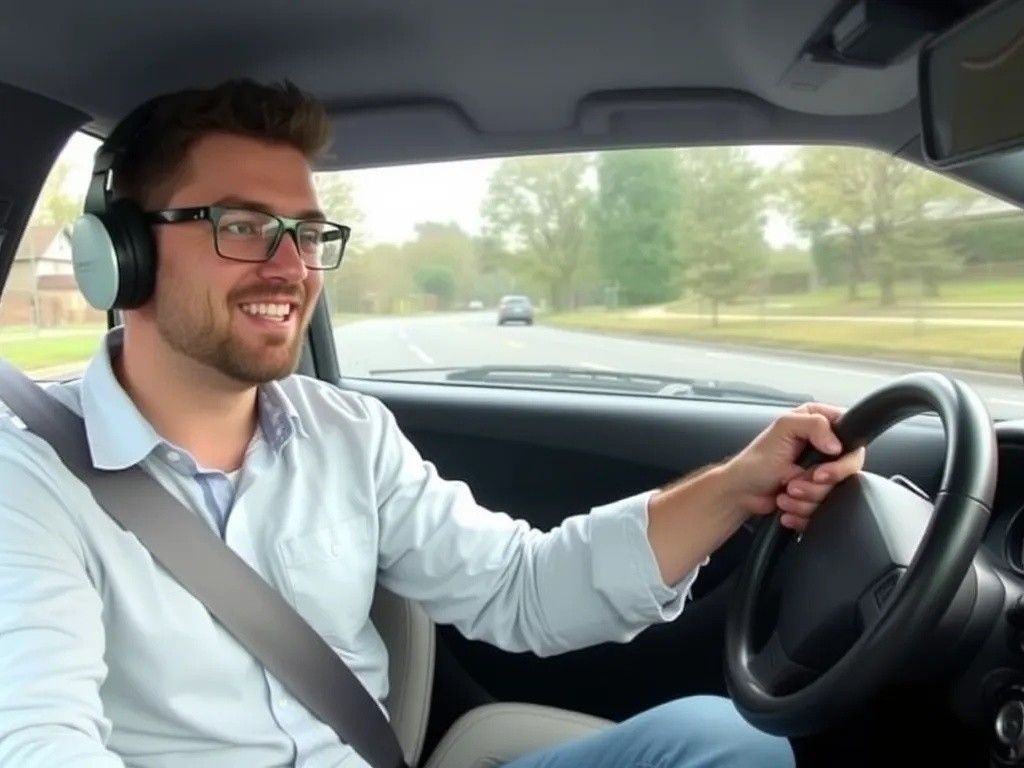
Learning to drive ranks among the most stressful experiences for many young people and adults, combining fear of making mistakes, concern about causing accidents, and anxiety about judgment from instructors and other drivers. Traditional driver education often places nervous beginners directly into real traffic situations before they have developed basic confidence and skills. Virtual reality driving instruction systems now offer an alternative approach that allows learners to develop competence in completely safe environments, building confidence gradually before encountering actual roads. This technology transforms driver education by reducing anxiety while improving skill development and safety outcomes.
The Psychology of Learning to Drive
Fear during driver education is not simply nervousness but a legitimate response to genuine risks. Mistakes while learning to drive can have serious consequences, and this awareness creates anxiety that actually impairs learning. When people feel threatened, their cognitive functions narrow, making it harder to process information, remember instructions, and develop smooth control skills. This creates a negative cycle where anxiety causes mistakes, mistakes increase anxiety, and learning becomes slower and more stressful than necessary.
How Virtual Training Breaks the Cycle
Virtual driving instruction removes the consequence of mistakes while maintaining realistic learning scenarios. Students can practice maneuvers repeatedly without fear of damaging vehicles or endangering anyone. This psychological safety allows learners to focus entirely on skill development rather than dividing attention between learning and managing fear. The absence of real consequences encourages experimentation and faster learning as students feel free to attempt challenging maneuvers without paralyzing anxiety about failure.
Virtual Reality Driving Simulator Technology
Modern VR driving systems create remarkably realistic environments using high-resolution headsets, accurate vehicle controls, and sophisticated software that simulates real driving physics. The learner sits in a physical driver's seat with an actual steering wheel, pedals, gear shift, and turn signals. The VR headset displays a full three-dimensional environment that responds naturally to head movements, creating genuine spatial awareness and depth perception essential for driving.
Realistic Vehicle Behavior
The simulation accurately replicates how vehicles respond to driver inputs. Steering feels natural with appropriate resistance and feedback. Acceleration and braking respond correctly to pedal pressure. The vehicle's weight and momentum affect handling realistically when turning or stopping. This accuracy ensures skills developed in simulation transfer effectively to real driving. The system can simulate different vehicle types, allowing learners to experience sedans, SUVs, or trucks and understand how each handles differently.
Environmental Variety
Virtual environments range from empty parking lots for initial practice to complex urban traffic scenarios. Learners can practice in residential neighborhoods, busy city streets, highways, rural roads, and challenging conditions like night driving or adverse weather. The system adjusts difficulty progressively, introducing more complex situations as competence develops. This controlled progression proves impossible in traditional driver education where instructors cannot control traffic conditions or guarantee opportunities to practice specific scenarios.
AI-Powered Instruction
The virtual driving teacher uses artificial intelligence to provide personalized instruction adapted to each learner's progress and challenges. Unlike human instructors with limited attention during lessons, the AI system monitors every aspect of driving performance continuously, identifying specific areas needing improvement and adjusting instruction accordingly.
Real-Time Feedback and Guidance
The AI instructor provides immediate feedback on driving actions, explaining what the student did well and what needs adjustment. The tone remains consistently supportive and encouraging, eliminating judgment or frustration that sometimes occurs with human instruction. When students make errors, the system explains why the action was problematic and demonstrates the correct approach. This immediate correction prevents bad habits from forming while mistakes are fresh in the learner's mind.
Adaptive Difficulty
The system automatically adjusts challenge levels based on performance. Students struggling with basic skills spend more time on fundamentals before advancing. Those demonstrating quick mastery progress faster to more complex scenarios. This personalization ensures each learner develops skills at an appropriate pace, neither rushing past important foundations nor feeling bored by excessive repetition of mastered skills.
Specific Skill Development
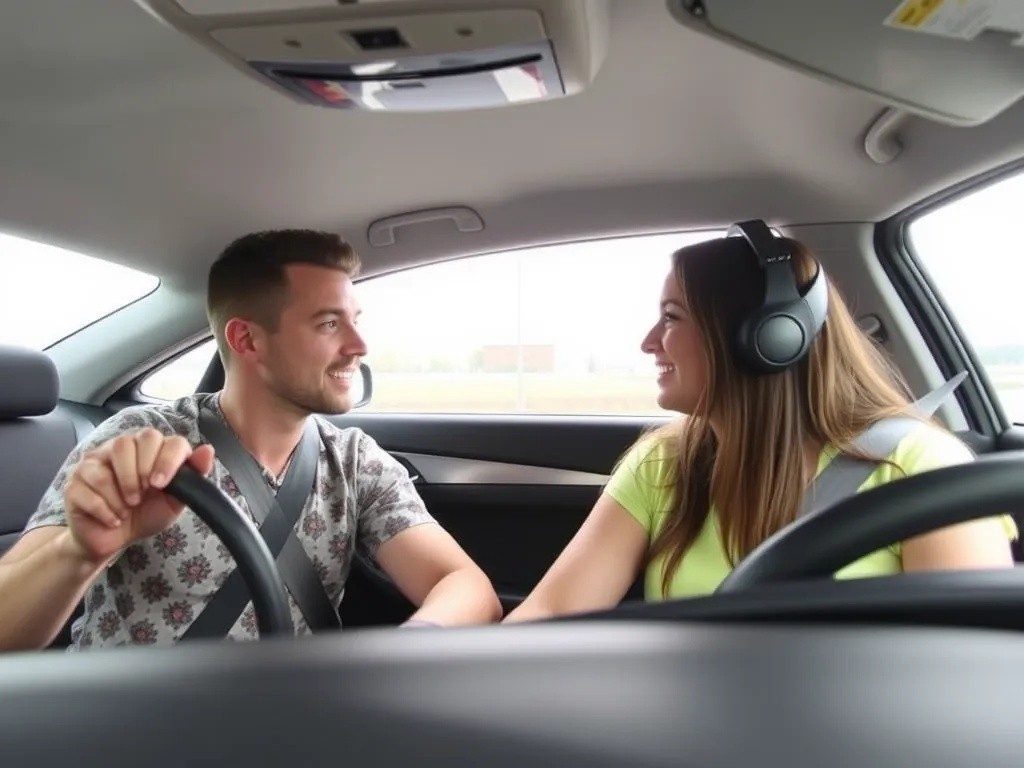
Virtual training excels at teaching specific driving skills that are difficult or dangerous to practice repeatedly in real conditions. These include parallel parking, which students can attempt dozens of times until they develop confidence and precision. Emergency maneuvers like sudden stops or obstacle avoidance can be practiced safely without risk. Highway merging and lane changes can be rehearsed until they feel natural.
Hazard Recognition Training
One crucial driving skill involves recognizing potential hazards before they become emergencies. The virtual system presents numerous hazard scenarios, teaching students to scan environments systematically and identify risks like pedestrians who might enter the road, vehicles that might turn unexpectedly, or conditions that might cause loss of control. This training develops defensive driving instincts that prevent accidents rather than simply reacting to emergencies.
Building Confidence Gradually
The system's greatest strength lies in how it builds confidence through graduated exposure. Students begin with the simplest possible scenarios in empty environments where they can focus entirely on basic vehicle control without any external pressures. As comfort develops, the system introduces light traffic, then more complex situations, then challenging conditions. This gradual increase prevents overwhelming anxiety while ensuring steady progress.
Students can repeat any scenario until they feel completely comfortable, taking as much time as needed without pressure from instructors, other students, or time constraints. This flexibility particularly benefits learners who need extra practice to overcome anxiety or those with learning differences who benefit from additional repetition.
Preparing for Real-World Driving
Virtual training is not intended to replace all real-world instruction but to provide a safer, less stressful foundation before students encounter actual traffic. Research shows students who complete virtual training before beginning road lessons demonstrate better vehicle control, more confident decision-making, and lower stress levels during initial real driving experiences.
Supplementing Traditional Education
Most driver education programs incorporating VR use it as a preliminary phase. Students complete substantial virtual training developing basic skills and confidence, then transition to real vehicles with human instructors for actual road experience. This hybrid approach combines the safety and personalization advantages of virtual training with the essential real-world experience needed for full licensing.
Accessibility Benefits
Virtual training improves access to driver education for people who face barriers with traditional instruction. Those with severe driving anxiety can develop skills privately without embarrassment about their nervousness. People in rural areas without easy access to professional driving schools can practice extensively at home. Individuals with certain disabilities can use adapted controllers in virtual environments before deciding whether to pursue specialized vehicle modifications for actual driving.
Cost Effectiveness
While VR systems require initial investment, per-student costs become very competitive with traditional instruction. Students need fewer real-vehicle hours with professional instructors because they arrive with basic competence already developed. The reduction in instructor time and vehicle wear makes driver education more affordable while actually improving outcomes. Home VR systems allow unlimited practice without the recurring costs of professional lessons.
Limitations and Considerations
Virtual training cannot replicate every aspect of real driving. Physical sensations like actual acceleration forces, road vibrations, and the kinesthetic feedback from real vehicle mass have no perfect virtual equivalent. Some students may experience motion sickness in VR, though this affects only a small percentage of users and usually diminishes with exposure. The technology supplements but cannot completely replace real-world driving experience.
Future Developments
Ongoing research focuses on improving haptic feedback to better simulate physical driving sensations, developing more sophisticated AI instructors that recognize and address psychological barriers to learning, and creating social training environments where multiple students practice together in shared virtual spaces. Integration with actual vehicles may eventually allow transitional experiences where students drive real cars in controlled environments with virtual augmentation providing guidance and safety systems.
Virtual driving teachers represent a significant improvement in how people learn this essential skill. By removing fear from the learning process while maintaining realistic training scenarios, this technology helps students become confident, competent drivers more quickly and with less stress than traditional methods alone can achieve.